• Skip to primary navigation
  • Skip to main content
  • Skip to primary sidebar
  • Home
  • About
  • Contact
  • Privacy + Terms
  • Affiliates

The Chaos and the Clutter

  • Facebook
  • Twitter
  • Pinterest
  • Google Plus
  • RSS
  • Email
  • School at Home
  • Sensory
    • Sensory Processing Disorder
    • Awesome Sensory Play Activities
      • Sensory Bins
      • Sensory Bottles
      • Sensory Bags
  • Family Games
    • Minute to Win It Games
  • Special Needs Parenting
    • Childhood Anxiety
    • Reactive Attachment Disorder
    • Sensory Processing Disorder
  • Store
  • Course Login

Special Needs Parenting

14 Things Your Special Needs Teen Needs to Hear You Say

By Sharla Kostelyk

Parenting a teen through the teen years can be challenging. Our responsibility as their parent is to encourage them as much as possible. Every child needs to hear they are special as much as possible. However, your special needs teen needs to hear you say positive things more often than anyone else. a mother and daughter both with long brown hair are forehead to forehead as the sun streams in behind them. The text reads "14 Things Your Special Needs Teen Needs to Hear You Say"

As a mom of special needs teens, it’s HARD to always be upbeat enough to want to say something positive. I’m tired. Sometimes quite frankly, it’s hard to find positive things to say.

But our teens are depending on us to help them build their confidence and self worth. It’s amazing the power a few short words can hold. While all teens need to hear these words, teens facing additional challenges need to hear them even more.

What to Say to Your Special Needs Teen

#1. You inspire me.

If your child inspires you, then you need to let them know. Your special needs teen is inspiring and it’s time that they know that! Maybe it’s the way they face the challenges they have or what they have overcome. Maybe it’s their determination or their fighting spirit. Whatever it is that inspires you about them, tell them.

#2. It’s okay to have bad days.

Some teenagers don’t realize that their parents have bad days. Talk to your teenager and let them know that everyone has bad days, even you. Hearing this from you will help them in more ways than you can even imagine.

#3. You are brave.

Getting up every day is hard. Getting up every day when you are facing additional challenges is even harder. Let your special needs teenager know that they are brave. They are so brave and they inspire you!

#4. The world is a better place because you’re in it.

What does your child bring to the world? Your special needs teenager needs to know that they make the world a better place.

#5. You are valued.

When someone tells you that you are valued, it makes you shine inside. Your special needs teen needs to know that they are valued! They need to know that what they bring to the table is so important.

#6. I love you, but I also really like you.

Who doesn’t want to be not only loved, but also liked? Liking our children is important and believe it or not, they need to know they are liked.

Liking our children isn’t always easy because kids can be a challenge. Your kiddo may have challenging behaviours or teenage mood swings. However, our kids need to know that their parents love and like them unconditionally.

#7. You are wanted.

In a world that tells a lot of children that they aren’t wanted, I want my kids to know that they are wanted. If you’re the parent of a special needs teen, then they need to know they are wanted. This simple statement can go so far.

A few weeks ago, I took my middle daughter out on a mommy-daughter date and I was telling her about the day we got the phone call she had been born and how deeply she was wanted. As I recounted details like how one of her grandmas came to our house 4 times before she arrived “is she here yet?” and other moments from that special day, she was just beaming.

#8. Our family is better for having you in it.

A family is only a family because of who is in it. Your special needs teen needs to hear that your family is BETTER for having them in it. It wouldn’t be the same without them.

#9. I love the way you look at the world.

Your special needs teenager has a unique way of looking at the world. Let them know that you see it and appreciate it!

#10. I believe in you.

Everyone wants someone to believe in them. Tell your special needs teen that you do believe in them. You believe in who they are and what they can achieve.

#11. I really like how you helped your brother or sister.

Even a teen who is non-verbal or who has limited mobility can help siblings with their smile. It can be easy to look past how helpful a child with special needs can be.

#12. You did a great job with that!

Parents are their child’s biggest cheerleader. When you see your special needs teen doing a good job, tell them how wonderful they are doing.

#13. Can I give you a hug?

Your special needs teen may need a hug, but not know how to tell you. They may feel that they are too old to ask for physical affection, but still want it. Always tell them you are up for a hug anytime!

For kids who are sensory sensitive, you can change this to a high five.

#14. I’m so proud of the young lady or young man you are growing into.

Every teenager is going to grow up, whether we choose to believe it or not. If a teen is going to grow up and be successful, then they need to have all the support they can get. Be sure they know how proud you are of who they are becoming.

Join me for a free 5 part email series, Little Hearts, Big Worries offering resources and hope for parents.

You may also be interested in reading:

The Waves of Grief in Special Needs Parenting


What That Special Needs Mom Needs from You12 Ways to Support a Special Needs Mom

Why Special Needs Moms Make Great Friends

Filed Under: Special Needs Parenting

Setting Up an Effective Morning Routine for School

By Sharla Kostelyk

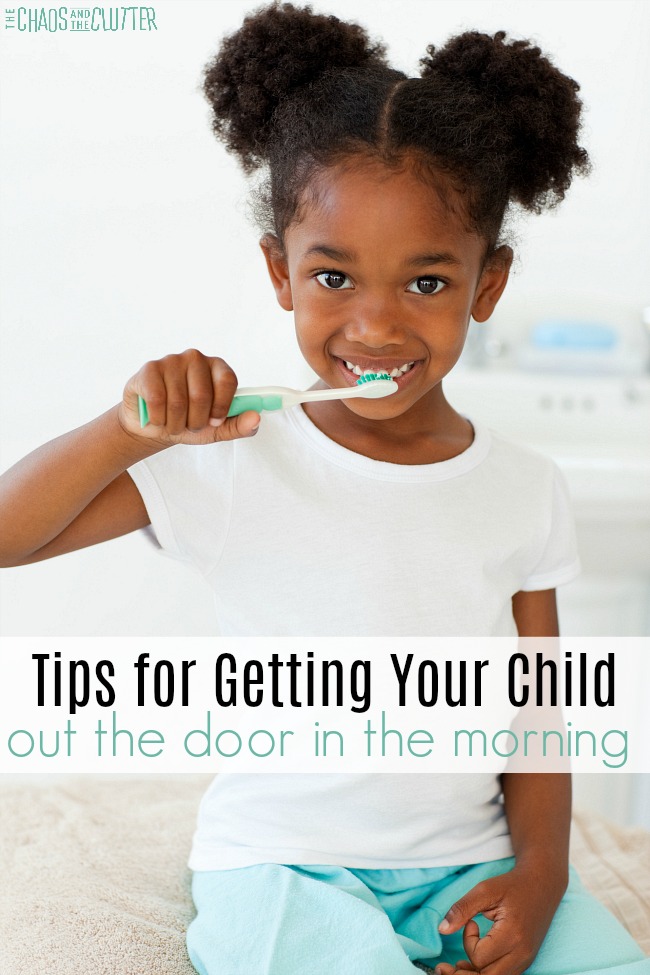
The school year is back in session and many of us are trying to get our children out the door in the morning. I can’t even tell you how hard this is! This can be rough for kids, especially when transitioning back into a morning routine for school.  a cute black girl with her hair in high pigtails wearing a white shirt and teal pants is brushing her teeth. The text reads "tips for getting your child out the door in the morning"They feel exhausted. Some kids have a hard time with the idea of being gone all day. You can help get your child out the door in the morning by following these tips:

Tips for Getting Your Child Out the Door in the Morning

Are you tired of fighting your child in the mornings? Morning routines can come with a lot of drama. However, there are some things you can do to take some of the stress out. You don’t have to be stuck in a rut of screaming and yelling to get your kids to listen to you. Here are some ideas for how you get your child out the door in the morning with less work on your part:

Going to Bed Earlier

According to studies, most kids are not getting enough sleep. Lack of adequate sleep can lead to problems with attention and focus, behavioural issues, drops in academic performance, and serious health issues.

You may feel as though your child can go to bed late and still wake up at a decent time. Pay attention to how your child does based on the amount of sleep they get. Experiment for a month and see if more sleep means easier mornings. 

I know that an earlier bedtime can be a challenge, but on top of the health benefits, it can help them wake up feeling more refreshed in the morning. Note that it takes at least two weeks to establish a new habit, so you may not see changes right away when you implement a new bedtime. Be patient. In time, you may see that getting your kiddos out the door in the morning is easier than ever when they’ve had enough sleep.

Using Timers

Do any of your kids struggle with time management? If this is the case, then including a timer in your morning routine for school is a GREAT idea.

Some kids just need to know how much time they have. This is totally okay because each child has different motivators and using timers may work for your child in the mornings.

Instead of setting a timer for when they have to be out the door, set timers for smaller tasks such as ten minutes until their teeth need to be brushed and their face washed. Set another timer for them to “beat” for getting dressed and then another for breakfast and so on.

Visual Schedule

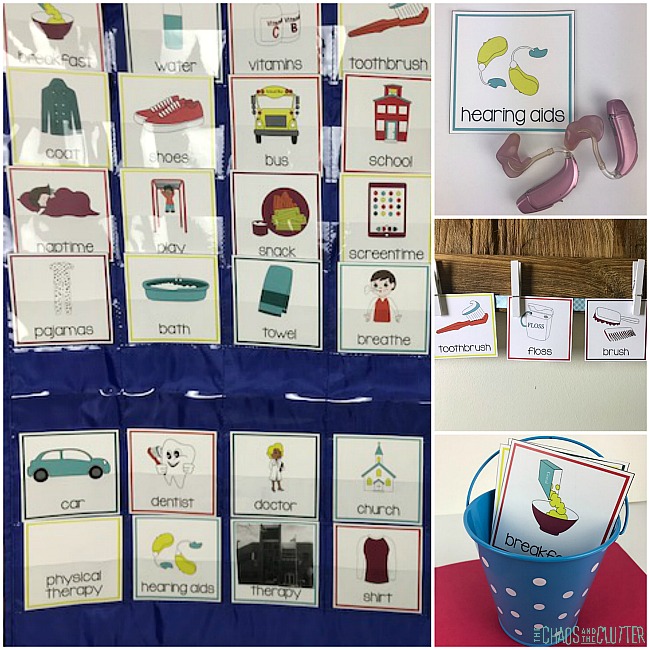
Visual schedules are such a great tool for kids. They allow kids to see what is coming next. They also give clear expectations about what needs to be done.

Having something visual to look at can keep kids on task, which in return can help kids get out the door in the morning.

Visual schedules were a game changer for us when it came to the kids’ morning routine. They were especially effective with our kids with special needs to break things into smaller tasks.

For a lot of kids, it’s easy to forget what they were doing if just told “get dressed”. If that same instruction is broken down into “underwear”, “pants”, “shirt”, “socks”, “shoes”, it is much easier to accomplish. But you’re busy too and don’t want to spend the morning nagging. This is where the visual schedule comes in.

Talk About Something to Look Forward to in the Day

Sometimes mornings are super rushed, which in return can take the fun out of the day. Talk to your child about something they have to look forward to in the day. Maybe you’re going to have a special lunch with them later that day. Perhaps a fun day at school is going to happen.

Giving your child something to look forward to helps them look ahead. Some children just need that excitement or that push to help them get out the door in the morning. You’d be surprised how much smoother a day can go when a child is focused on something that interests them.

Breathing Exercises

Do you have a kiddo that gets overwhelmed easily? Taking a deep breath is a great stress management tool. When your child starts getting overwhelmed or they just need a little help getting through the morning, bring out the breathing exercises.

A simple “in through the nose, out through the mouth” works if they are not yet agitated, but you may need to take a bit more time and walk them through some calm down breathing exercises.

Food

Brains don’t work well without fuel. Kids need food to function. Having them eat first instead of after they get  dressed can make them do the other things on their list faster. It will also improve their mood and behaviour.

With everything happening on busy weekday mornings, it can be hard to come up with healthy breakfasts that are quick to put together or that can even be grabbed on the go in a pinch.

I like to use make ahead breakfasts so that they are in the freezer and ready to go.

Lay Out Clothes the Day Before

Sometimes kids struggle to make decisions in the morning, which can really put them behind schedule. A little trick that I learned in the start of my parenting years is to lay out clothes the day before.

This is so helpful because then the kids know exactly what they are going to wear the next day. Some of my kids even like sleeping in their school clothes the night before. This means they only have to get up, throw on some shoes, and be on their way!

Simplicity is best in some cases. As a parent, you need to know which battles are worth fighting and pyjamas are not a mountain to die on in my opinion.

If also helps to be sure that everything else is ready the night before such as backpacks, important papers, and school lunches. This small tweak in the morning routine for school will pay big dividends.

Thick Smoothies Through a Straw 

This little trick of mine kills two birds with one stone. If you want to solve your kids being hungry and them being dysregulated or moody…Smoothies!

For kids who need a calming resistive sucking motion, thick smoothies through a straw is my go-to. This solves the hunger issue, the time issue, and helps keep your kiddo calm and focused. I make freezer smoothie bags ahead of time so they are fast to whip up.

Sensory Input

When mornings are stressful and you have a child that is struggling with sensory overload, focusing on sensory input can be important. Sensory input can come in a variety of forms. Throughout my years of parenting, I have found some sensory input that works great on the go.

Some of my favourites for my kids are listening to an audiobook on the way out the door. As mentioned before, straws give great oral sensory input. Send your child on a visual letter hunt in a book. This works great for kids who need visual sensory input.

Heavy work activities are a great way to start the day off regulated and calm.

Waking Up Earlier

Some kids just need extra time to get ready. One way to get kids to wake up earlier is to get them to bed earlier. You may find that your kids are easier to get out the door in the morning when they wake up earlier. This isn’t always easy, but it does work for some children.

Leave Plenty of Time

This goes along with the “waking up earlier” tip. Don’t forget to leave plenty of time for getting out the door in the morning. Try not to rush the kids with a short time period of getting ready.

Whether your kids take the bus to school or you drive them, there can be changes in timing. Note if there are reasons such as traffic, construction, or change in schedule that require you to leave the house sooner and adjust the morning routine accordingly.

I would love to hear your tips for getting your child out the door in the morning. What tips do you have to offer?

You may also find these articles helpful:

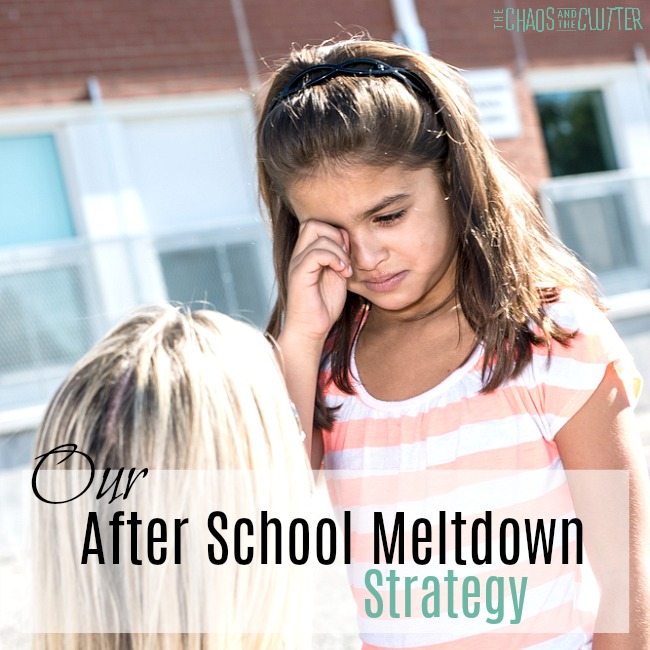
The After School Meltdown Strategy that really works

Calm Down Breathing for Kids

Filed Under: Parenting in the Chaos, Special Needs Parenting

Hair Care: Tips for Kids with Sensory Struggles

By Sharla Kostelyk

Hair care can be torture for some kids with sensory issues. While all of us have sensory preferences, for kids with Sensory Processing Disorder or autism, having their hair washed, combed, or cut can go beyond just being unpleasant. I’ve put together a list of tips to help kids who struggle with sensory issues when it comes to their hair.

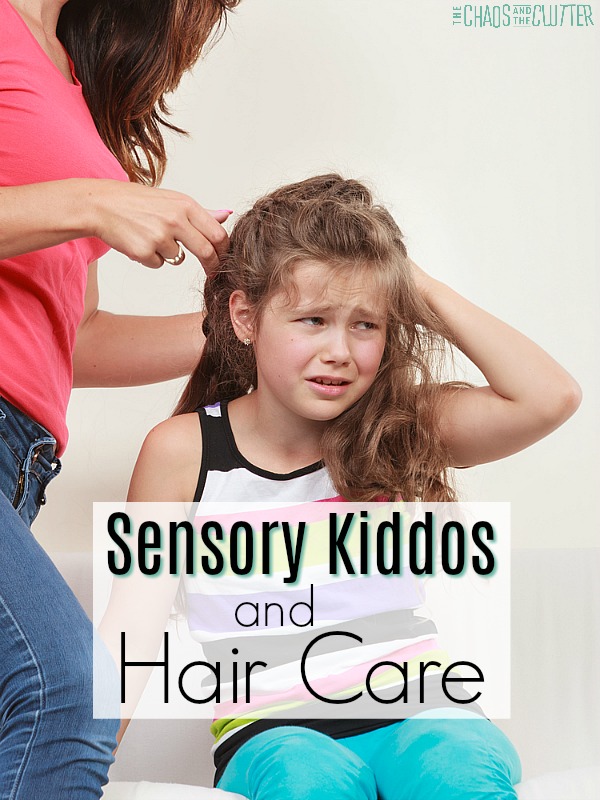
a woman in a coral shirt and jeans tries to comb her daughter's hair. The daughter looks very distraught. The words "Sensory Kiddos and Hair Care" are overlaid on the image.

Lately, a lot of readers have been contacting me for advise about their child’s hair. I understand this concern well as one of our sons used to cower in the corner when he saw me reach for the hair brush. He would scream and beg me not to comb his hair.

Mornings became difficult for both of us. His beautiful curls became knotted if I gave in to his pleas not to comb it which only made it worse. And bath times were another battle ground as he hated the feeling of the water on his face when rinsing the shampoo off.

Obviously with his scalp being as sensitive as it was, there was absolutely no way he would allow a hairdresser near his head.

We got to the point where we just shaved his hair super short so that it didn’t have to be such a daily battle.

Since then, I’ve learned a lot about sensory and together, he and I have come a LONG way! He is a teenager now and actually enjoys getting his hair cut at the barber. He does prefer to keep it short still, but is happy to have it washed and cut.

A lot of sensory kiddos are super sensitive about having their hair washed, cut, combed or even touched. There are many reasons for this.

Sensory Reasons for Hair Struggles:

Vestibular – Some kids are sensitive to having their head tilted backwards or forward for rinsing when having their hair washed. Your vestibular system controls your body’s sense of balance and motion. Kids with vestibular issues can feel unsteady, uncomfortable, or even afraid when tipping their head.

Olfactory (Scent) – Your child may be sensitive to the smell of the hair products you are using on them.

Tactile – Many children with sensory issues have very sensitive scalps or are sensitive to touch in general from hands, brushes or combs, and even water. Water on their face, in their eyes, or having shampoo get in their eyes can be difficult for all kids, let alone ones with higher sensitivities. Tactile is the most common reason for problems with hair care in kids with sensory sensitivities.

Auditory – Some kids struggle with the sound of the clippers at the hairdresser or the sound of the water in a shower.

Tips for managing hair care and sensory needs:

  1. Determine the root cause. Talk to your child and also make your own observations and see if you can determine what the biggest sensory issues are. That way, you’ll be tackling things accurately.
  2. Acknowledge to them and to you that this is not a child being difficult. This is a real thing that is causing them real pain or discomfort. Doing this will give you more patience and empathy.
  3. Wash their hair less often. Kids do not need their hair washed daily (unless your physician has given you a medical reason why your child does). Every third day should be sufficient unless they happen to play in the mud on the in between days. You can also use a dry shampoo for the days in between if you’re concerned about the cleanliness of their hair.
  4. If shampoo is your main battle, skip the shampoo. Wash with water and a conditioner and use dry shampoo.
  5. Give your child more control in the process. Allow them to choose their hair products. Let them smell shampoos and conditioners at the store and decide what they like or buy unscented. Let them comb and style their own hair.
  6. Choose a low maintenance hair style for them. This was easier for me to do with my son than it was when one of my daughters had a hard time with having her hair combed and wanted it cut short, but I knew that “pretty hair” wasn’t worth the tears it would take every day to get there.
  7. Don’t expect your child to hold still while you comb or style their hair. Give them a fidget to play with or a weighted lap pad. Let them play Lego or watch TV or both. It won’t be easy for you to comb hair on a moving target, but it will be less stressful if they are less upset.
  8. Make changes. (see list below)
  • Try a different comb such as a Tangle Teaser or Wet Brush.
  • Try a bath rather than a shower or a shower rather than a bath.
  • Wash their hair in the sink rather than in the bath.
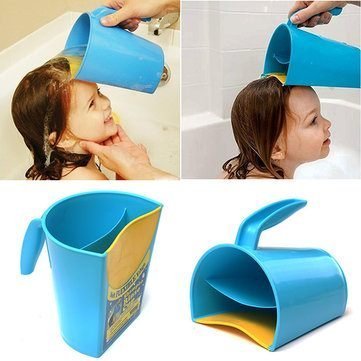
  • Try dumping water on their head using a Rinse Cup rather than having them tip their head back.
  • Have your child use a Bath Visor to avoid getting as much water on their face. You can also use this during haircuts to avoid pieces of hair getting on their face.
  • Allow your child to wear swim goggles or a snorkel mask in the bath or shower.
  • Be sure you are using an excellent detangler so that knots are not making the hair combing situation even worse.
  • Use a visual timer so that your child knows how long they have to “endure” having their hair brushed.

Rinse Cup for hair washingRinse Cup for hair washingRinse Cup for hair washingBath VisorBath VisorBath VisorDive MaskDive MaskDive MaskSwim GogglesSwim GogglesSwim GogglesVisual TimerVisual TimerVisual TimerTangle Teezer BrushTangle Teezer BrushTangle Teezer BrushWet BrushWet BrushWet BrushDry ShampooDry ShampooDry Shampoo

A note about haircuts:

Our hairstylist comes to our house and used to cut our kids’ hair where they are comfortable while they play with toys or read or watch TV to distract them. If this isn’t possible for you, pass these tips along to your salon to help them be more sensory friendly.

You also may want to ask them about the calming clipper kit. This sensory friendly barber kit is made just for kids with sensory needs. You can also use it yourself at home where your child is most comfortable.

Biggest tip about hair and sensory needs:

As odd as this sounds, don’t work at all on trying to increase your child’s ability to handle having her head or hair touched. Leave the hair alone as much as possible and instead, focus on increasing other sensory activities: sensory play, heavy work, sensory input.

If you are working with an OT, ask them about dry brushing. This type of brushing is for the skin, not the hair, but is best under the care of an OT.

By increasing your child’s range of sensory experiences (sensory diet), it will eventually begin to be easier for them to have their head and hair touched.

Get a copy of Sensory Processing Overload Signs to print off and keep as a reminder here. 

Filed Under: Sensory, Special Needs Parenting

Why You Should Befriend a Special Needs Mom

By Sharla Kostelyk

Maybe you’ve seen that mom at the playground or in the halls at school. Maybe you’ve passed by her many times and thought of saying something, but you haven’t. Here’s why I think you should befriend a special needs mom. Why Special Needs Moms Make Great Friends #specialneedsparenting #specialneeds

She needs you.

It’s tough being the mom of a child with special needs. She needs allies, laughter, and support. She also needs a break from time to time.

It’s lonely when the other moms exclude you. It’s not usually done intentionally. Perhaps, the other moms aren’t sure what to say. They may not want to offend.

Be that brave woman who walks over to the other side of the room and invites that special needs mom in.

You have more in common than you may think.

Moms are moms. Whether they are parenting a “neurotypical” child or a child with special needs, all moms fiercely love their son or daughter.

You both want what’s best for your child. Both of you worry and wish. And you do the very best that you can.

You can learn from her.

There is so much you can learn from her. She’s probably an expert in advocating for a child. I’m sure she’s got pointers she can share with you when it comes time for you to talk to the school or a doctor about your child.

If you’re looking for someone who can model patience, chances are, she’s it!

Here are just a few of the other things she can probably teach you:

  • celebrating the small wins
  • being in the moment
  • compassion
  • research
  • stretching a dollar
  • accessing resources
  • finding joy in little things

It will give you new perspective.

Listening to a mom with a special needs child share her heart, her worries, her struggles with you will give you a new perspective for your own.

It’s not that your problems aren’t still valid. In fact, be sure to share those with her as well because chances are, she has built a lot of compassion over the years and may also have some wisdom to share that could help. But growing your awareness of the challenges others face, it will give you a different perspective on things you face in your own life. It will help you not to “sweat the small stuff” and to appreciate what you have.

She’ll be a loyal friend.

Chances are, she lost her share of friendships after her child was diagnosed. Some because they weren’t sure what to do or what to say and some because they didn’t want to put in the effort. Others out of guilt that their children were healthy. And many because she could no longer attend events or because their child was considered “difficult”.

Losing those friendships was painful. It was another hurt she wasn’t expecting at a time when she most needed support. But it taught her to appreciate the friends that stuck by her. It showed her the value of true friendship. She doesn’t take that lightly.

You’ll be inspired.

Special needs moms aren’t perfect. They fail as often as you do. But it’s the getting back up every time that is inspiring. When all the odds are stacked against them, they only seem to grow stronger.

It will make you a better mom.

After spending time with your new friend, you’ll find yourself appreciating the little things with your kids. Her compassion and patience will rub off on you.

Every friendship enhances your life and contributes to your self care which makes you able to give more to your children.

The moms I know who are parenting special needs children are determined, inspiring, committed, loving, generous, giving, and smart. I am better for having them in my life.

As a special needs mom myself, I’m also undeniably grateful for the “regular” moms who I can call friends. They have blessed me abundantly by making me feel included and reminding me what it feels like to laugh.

If you are a special needs mom, I encourage you to befriend both other special needs moms and other moms. You can learn so much from both.

Join me for a free 5 part email series, Little Hearts, Big Worries offering resources and hope for parents.

What Special Needs Moms Need From You 12 Things a Special Needs Mom Needs from you

Filed Under: Special Needs Parenting

50 Awesomely Simple Calm Down Strategies for Kids

By Sharla Kostelyk

Calm down strategies for kids don’t have to be complicated to be effective. The key is to find the ones that work best for your child. Each child is different and therefore, their preferred methods for calming will be as well. 50 Awesomely Simple Calm Down Strategies for Kids #calmdown #calmdowncards #calmdownstrategies #specialneedsparentingCalm down techniques work for any child (or adult for that matter!). They are especially good to use for kids with autism, ADHD, Sensory Processing Disorder, FASD, early childhood trauma, Reactive Attachment Disorder, or anxiety.

I’ve put together 50 calm down strategies that are so simple that anyone can do them. These don’t require expensive equipment or a lot of time. 

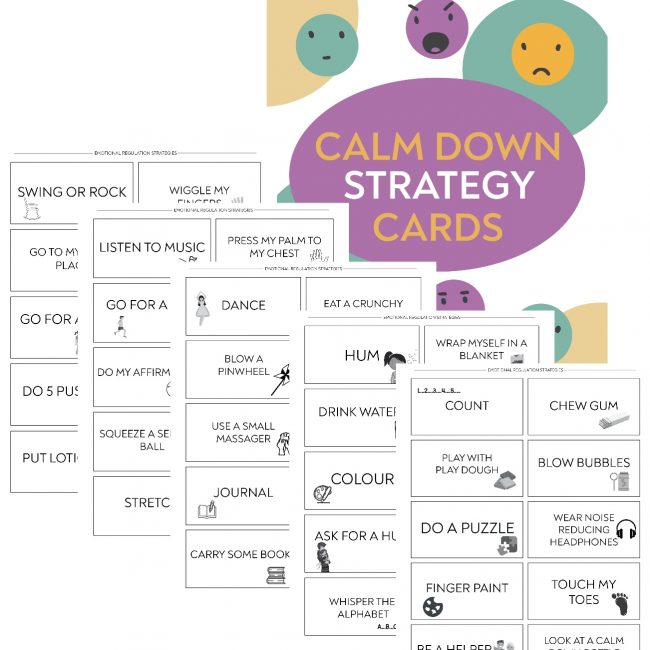
The formula for success is to practise these with your child when they are calm, discover which ones they respond to, and then have them use those in the times when they are needed. It can be very helpful to use calm down strategy cards. This allows the child to have a visual cue. This reminder can be especially helpful when they are beginning to feel out of control.

I suggest only including the strategies that you know work for your child. Otherwise, it could cause frustration for your child. You can discover which ones they prefer when you are practising with them while they are calm rather than trying to discover it when they are upset.

Simply pop your email into the form below and you’ll be able to print off the cards for yourself. Then, cut out the cards, hole punch them, and put them on a binder ring for your child to keep in their pocket, backpack, or calm down kit.

By helping your child or student learn the calming methods that are effective for them, you will help them gain independence. It feels empowering for kids to be able to regain control on their own.

50 Calm Down Strategies for Kids:

  • Hum
  • Wrap Yourself in a Blanket
  • Drink Water
  • Draw a Picture
  • Colour
  • Breathe
  • Ask for a Hug
  • Read a Book
  • Whisper the Alphabet
  • Pray
  • Listen to Music
  • Press Your Palm to Your Chest
  • Go for a Run
  • Relax Your Face
  • Do my Affirmations
  • Push on the Wall
  • Squeeze a Sensory Ball
  • Play with a Fidget
  • Stretch
  • Jump
  • Count
  • Chew Gum
  • Play with Playdough
  • Blow Bubbles
  • Do a Puzzle
  • Wear Noise Reducing Headphones
  • Finger-paint
  • Touch Your Toes
  • Be a Helper
  • Look at a Calm Down Bottle
  • Dance
  • Eat a Crunchy Snack
  • Blow a Pinwheel
  • Pop Bubble Wrap
  • Use a Small Massager
  • Hug a Teddy Bear
  • Journal
  • Take a Shower
  • Carry some Books
  • Close Your Eyes
  • Swing or Rock
  • Wiggle Your Fingers
  • Go to Your Quiet Place
  • Play the Harmonica
  • Go for a Walk
  • Trace Shapes on Your Hand with Your Finger
  • Do 5 Pushups
  • Name Your Emotions
  • Put Lotion On
  • Do Yoga

You may also be interested in reading:

How to Create a Calm Down Kit for Children 

The After School Meltdown Strategy That Really Works 


Filed Under: Special Needs Parenting

Powerful positive affirmations for kids to change their mindset

Unicorn Affirmations

By Sharla Kostelyk

When I was growing up, my dad used to say to me, “whether you think you can or think you can’t, you’re absolutely right”. His version of the Henry Ford quote was designed to teach me about the power of our mindset. One of the most effective ways to help kids change their mindset is by teaching them to use positive affirmations. Positive Affirmations for Kids #growthmindset #positiveaffirmations #unicorn #mindsetThe thing about something that you hear or say over and over is that it gets stuck in your brain. It becomes part of your inner voice. This is true for both positive and negative words.

During certain times in my life, my dad’s repetition of that quote has come to mind. That quote has even come out of my own mouth in talking to my children. In that same way, affirmations that we tell our kids or that they tell themselves will live in their minds and be brought forward in the future.

As parents, we want as many of those as possible to be positive.

When one of my kids is struggling, do I want the first thought that comes to mind to be “I can’t do this” or do I want it to be “I can figure this out”?

Obviously, I want it to be the latter. But in order for that to happen, I need to ensure that they are practising positive affirmations.A positive affirmation is a statement meant to overcome negative thoughts. Negative thoughts contribute to self-sabotage, stress, pessimism, anxiety, and depression. Therefore, you want to retrain your child’s brain to replace those negative thoughts with positive ones.

How do I use positive affirmations with kids?

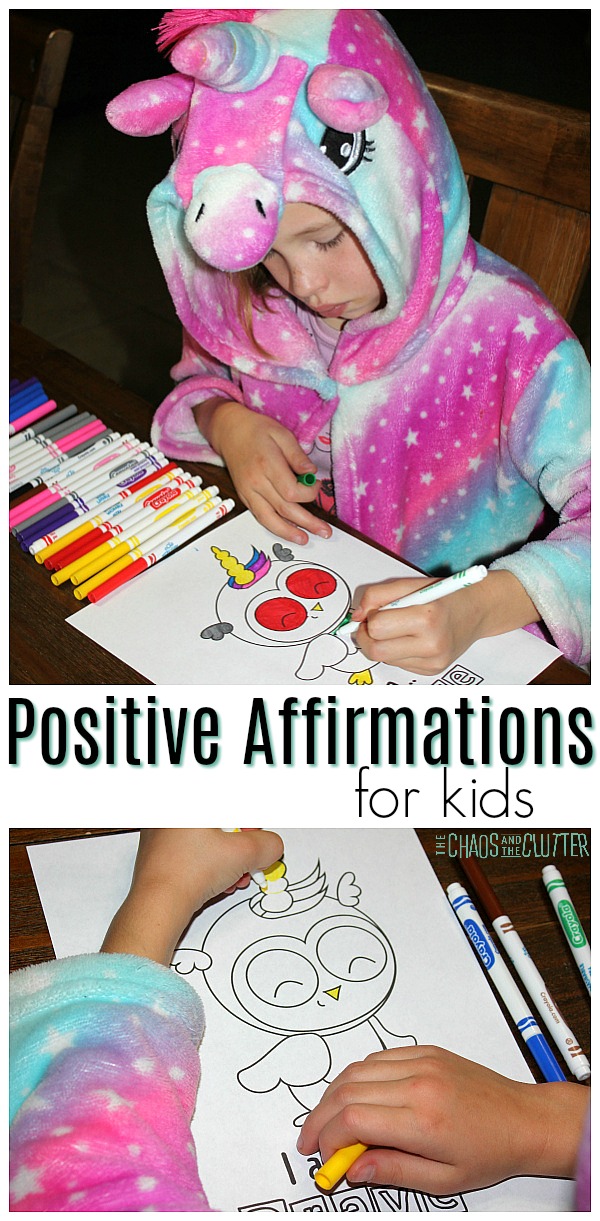
  1. Repetition, repetition, repetition. The key to this method being effective is having the affirmation repeated often. It also helps if the affirmation is said out loud by others, “you are kind”, by the child, “I am kind”, and is reinforced in other ways such as singing a song about it or colouring it.
  2. Use affirmations in the present tense. Even if the statement is something your child has not yet mastered and is still working towards, it is more powerful to say “I am a good friend” than it is to say “I will be a good friend”.
  3. Affirmations need to be specific.
  4. Allow your child to choose their own affirmations. You can of course make suggestions, but the most effective ones will be those that resonate with them. 

How do I teach my child to be positive?

One complaint I hear from a lot of parents is that their child is negative. Some kids seem to be born with a “glass half empty” mentality. While positive affirmations are not going to completely change a child’s personality, they will improve your child’s outlook.

The way that a child sees themselves shapes the way they see the world. When a child sees themselves negatively, they will also see everything around them through that lens.

Practising positive affirmations can help a child to see themselves in a more positive light. This then allows them to see those people and circumstances around them more optimistically as well.

Practising intentional gratitude will also help a child to be more positive. They can do this by:

  • writing or saying five things they are grateful for each day
  • writing thank you notes
  • drawing what they are thankful for
  • using Post-its to jot down what they are grateful for
  • making positive observations about what they see, smell, touch, taste, or hear

We have a gratitude hallway covered in Post-its. It makes me smile. The kids add Post-its whenever they want.

Please note:

Positive affirmations do not address underlying trauma or special needs. They aren’t a “quick fix”. But even for children who have early childhood trauma issues or other factors that negatively affect their mindset, positive affirmations are not harmful. They can be one tiny piece of the puzzle towards healing.

Adorable Unicorn Affirmations for Kids:

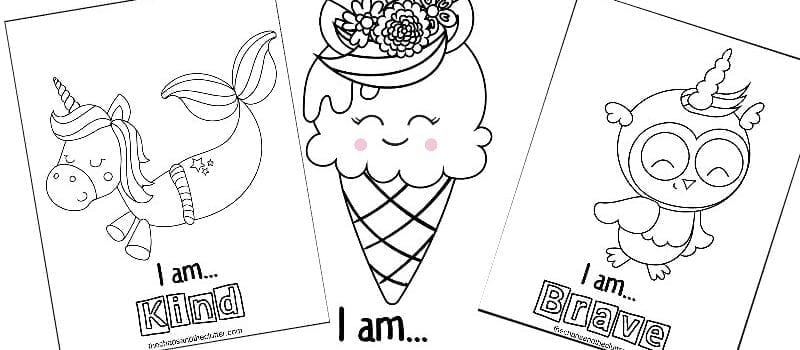
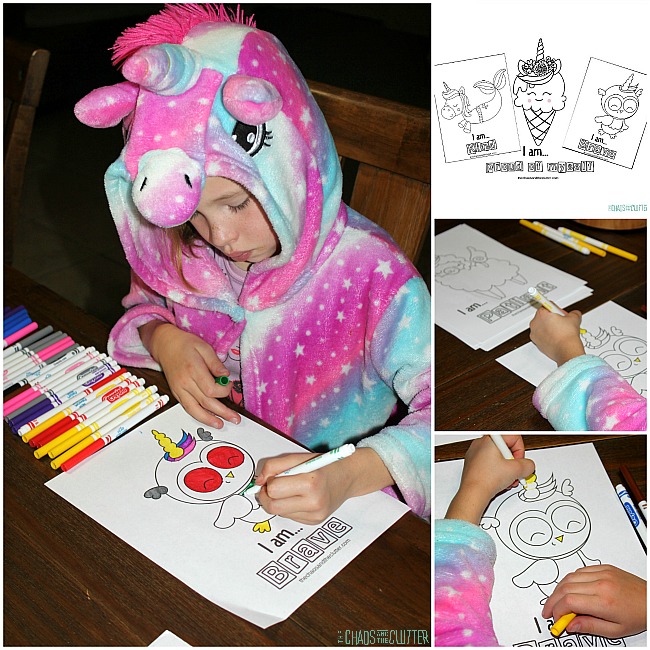
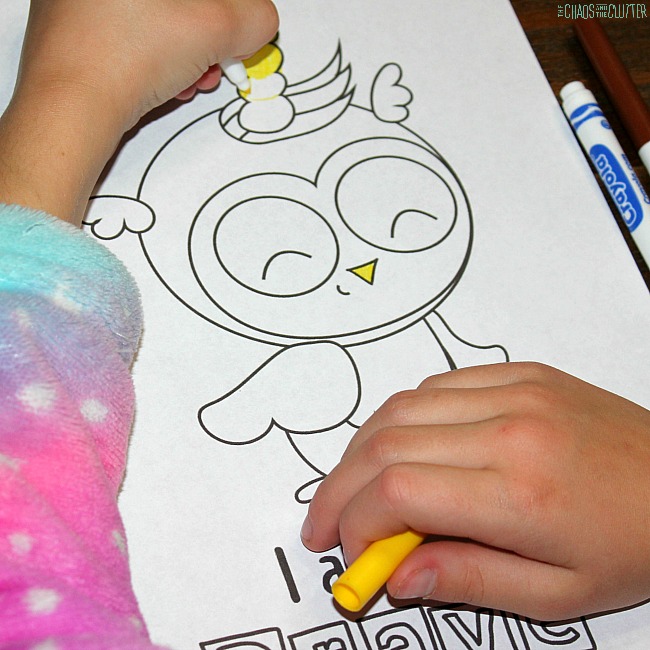
These free printable unicorn affirmation pages are adorable! They include the following positive affirmations:

  • I am confident.
  • I am happy.
  • I am kind.
  • I am brave.
  • I am patient.
  • I am loved.
  • I am a good friend.
  • I am proud of myself.
  • I am safe.
  • I am awesome.

To download your printable unicorn affirmation pages for kids to colour, just submit your email below.

Unicorn Affirmations printables for kids #mindset #growthmindset #unicorns #positiveaffirmations #affirmations

Filed Under: Parenting in the Chaos, Printables, Special Needs Parenting

  • « Go to Previous Page
  • Page 1
  • Page 2
  • Page 3
  • Page 4
  • Page 5
  • Page 6
  • Interim pages omitted …
  • Page 19
  • Go to Next Page »

Primary Sidebar

Categories

We are a participant in the Amazon Services LLC Associates Program, an affiliate advertising program designed to provide a means for us to earn fees by linking to Amazon.com and affiliated sites.

Copyright © 2026 • The Chaos and the Clutter • Site Design by Jeni @ The Blog Maven

Return to top of page

Copyright © 2026 · Chaos and the Clutter 2.0 on Genesis Framework · WordPress · Log in