• Skip to primary navigation
  • Skip to main content
  • Skip to primary sidebar
  • Home
  • About
  • Contact
  • Privacy + Terms
  • Affiliates

The Chaos and the Clutter

  • Facebook
  • Twitter
  • Pinterest
  • Google Plus
  • RSS
  • Email
  • School at Home
  • Sensory
    • Sensory Processing Disorder
    • Awesome Sensory Play Activities
      • Sensory Bins
      • Sensory Bottles
      • Sensory Bags
  • Family Games
    • Minute to Win It Games
  • Special Needs Parenting
    • Childhood Anxiety
    • Reactive Attachment Disorder
    • Sensory Processing Disorder
  • Store
  • Course Login

Parenting in the Chaos

Appendicitis: What Parents Need to Know

By Sharla Kostelyk

You never expect when you wake up on a Wednesday morning that part of your night will be spent waiting for your son to get out of surgery. A series of events led to us almost not catching our son’s appendicitis. We narrowly avoided a catastrophe. The surgery was just in time.
Appendicitis: What Parents Need to Know that could save their child's life

The week before, our daughter Granola Girl had gotten a cold and then on the Friday, she ended up with the stomach flu and a lot of vomiting. So when Snuggle Puppy got a cold on the weekend and then on Monday told me that he had a stomachache, I assumed that he, too had the stomach flu. I was anticipating that he would throw up, but he never did.

Tuesday morning, he didn’t say anything about his stomach, but when I asked him if it still hurt, he said “yes”. We homeschool but Snuggle Puppy takes two classes at a local school and Tuesday afternoon, he had Bible and Phys. Ed. class. He convinced me that he was up to going, but I wrote him a note for him to sit out of gym class. He chose not to give the note to his teacher because he really wanted to play basketball and so he played basketball Tuesday afternoon.

Tuesday at supper, he begged us to let him go to his youth group Bible study. We were hesitant because we wanted him to get some rest, but he wasn’t fevered, wasn’t nauseous and even his cold symptoms seemed to be clearing up. He was very convincing in his arguments and so Tuesday evening, Snuggle Puppy went to the Bible study.

Wednesday morning, he woke up, did not complain about his stomach, ate breakfast, and we started doing our homeschooling. He even sat with us at the table and wrote a spelling test. I asked him if his stomach still hurt and he said “yes”. Soon after, I saw him crouched down in the living room and he said “mommy, my tummy really hurts”. Those words were all it took for my husband to take him to the hospital. It may not sound like enough, but we knew that our son is not a complainer and has a high pain threshold. Parents always know their child best.

At the first hospital, they ran blood tests and they all came back perfectly normal. Although he was showing tenderness upon their physical exam, he wasn’t in excruciating pain, so they did not think it was appendicitis. They did an ultrasound to find out if there was another problem that may be causing his pain and saw that his appendix was enlarged. It was so much larger than it should be that they thought maybe it was an error.

They called over to another hospital and spoke to a surgeon and the decision was made for us to take him to the other hospital. The first hospital was a community hospital without surgical facilities.

When we arrived at the Children’s Hospital, they weren’t sure whether or not they should operate because he had almost no signs of appendicitis. The surgical resident initially said they were not going to operate, but then an experienced surgeon came in and had a look at him and told us that his gut was saying it was appendicitis even though most of the tests were showing otherwise. I am so thankful that the surgeon decided to listen to his gut. I think “his gut” was actually God whispering to him.

After the surgery, the doctor came out and told us that the appendix would have burst that night. They said it could have been a matter of minutes. (Keep in mind that this is the same kid who played basketball the afternoon before!)

We are grateful for God’s protection and we are thankful for a doctor who listened to his gut instead of relying solely on test results. Not everyone is as fortunate as we were. I have since heard some stories that did not end as well as ours did. That is why I want to arm other parents with some knowledge about appendicitis.

These are the things you need to know:

There may not be a fever.

Our son had absolutely no fever in the days leading up to his surgery or following.

The symptoms may mimic the stomach flu.

Many of the symptoms of appendicitis can look like the stomach flu and it can be hard to tell them apart. In our case, since the flu had been going through our house just days before, it made it that much more confusing.

The pain may not be excruciating.

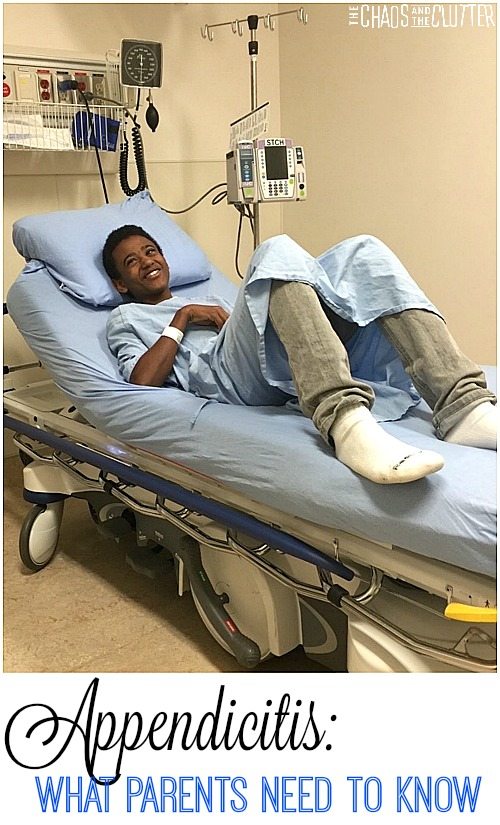
Our son played basketball the afternoon before and was walking and talking normally up until his surgery. He was not doubled over, screaming, crying, or even wincing. The only time his face showed any pain was when they were doing his physical exam and pressing on the site. Even then, he did not cry out. This picture is of him pre-surgery:

What Parents Need to Know About Appendicitis that could save their child's life

Blood work may not be an accurate indicator.

Doctors will check for an elevated white cell count which is an indication of infection. CRP levels are also looked at by some hospitals as being an indicator of possible appendicitis.

In the case of our son, all of his blood work was completely normal. On paper, he showed up as a healthy boy. If the blood results are normal and you feel that it is more serious than a regular stomachache, you can insist on an ultrasound.

You know your child best.

Doctors are skilled and experienced, but they do not know your child. You are the ultimate expert on your child.

In our case, I did explain to the doctors that due to his high cortisol levels, our son has a high pain threshold, but they are used to hearing from many parents that their kids have a high pain tolerance and I don’t think they took me very seriously but I knew my son and I knew that not only does he have a high pain threshold, he also is not a complainer, so for him to be saying that something hurt meant that something hurt. I knew it was his appendix hours before because my momma instinct told me.

Trust your instincts and don’t be afraid to advocate for your child because…

If left untreated, it can be fatal.

Appendicitis can lead to the appendix perforating causing pus to leak into the abdomen and in some cases, leading to a blood infection called septicemia which can be fatal. It can also cause other dangerous infections.

According to WebMd, the classic symptoms of appendicitis include:

  • Dull pain near the navel or the upper abdomen that becomes sharp as it moves to the lower right abdomen.
  • Loss of appetite
  • Nausea and/or vomiting soon after abdominal pain begins
  • Abdominal swelling
  • Fever of 99-102 degrees Fahrenheit
  • Inability to pass gas

Our son had only one of those symptoms (the abdominal pain).

Almost half the time, other symptoms of appendicitis appear, including:

  • Dull or sharp pain anywhere in the upper or lower abdomen, back, or rectum
  • Painful urination
  • Vomiting that precedes the abdominal pain
  • Severe cramps
  • Constipation or diarrhea with gas

Our son had none of those symptoms.

Please note that I am not a medical doctor and I am not asking you to go in and demand that they remove your child’s appendix at the first sign of every tummy ache. I am only a mom sharing our story in the hopes that it helps another mom out there.

Sensory Meltdowns: Causes, Prevention and Strategies

Calming Your Child’s Fight, Flight or Freeze Response

Filed Under: Parenting in the Chaos

6 Things I Learned When My Child Was Kidnapped

By Sharla Kostelyk

I know that if you are a regular reader, you’re used to hearing from only me. I don’t usually allow guest posts on The Chaos and The Clutter, but when my friend Jennifer approached me about her story, I knew I had to make an exception. I think that most of us have the view of kidnapping as being stranger abductions and I know that I certainly think of it as something that isn’t likely to ever happen to my kids, but believe me, if it can happen to her, it can happen to me and it could happen to you.

That’s why I felt that sharing her story was so important. Knowledge is power. I was shocked reading the statistics. If this helps one family not to have to go through this or helps a family who does go through it to have a positive outcome, then her coming forward to share her story will have been worth it.

With that, I’m turning this over to Jennifer as she shares with you in her own words her personal experience with something she never thought could happen to her.


We’ve all seen played up kidnappings on TV – a late night home invasion, followed by a ransom note, and a frantic family gathered around their coffee table with FBI officers and high-tech equipment.

6 Things I Learned When my Child was Kidnapped that you need to know too. Reading this could help protect your family.Image Copyright: ababaka / 123RF Stock Photo

While kidnapping is one of the biggest modern fears that plagues parents, at the center of the debate against free-range parenting and receiving constant buzz on social media, as a society, we have a really inaccurate idea of what kidnapping actually looks like.

I’m scared to share my kidnapping story.

Correction. My daughter’s kidnapping story.

I’m scared for a few reasons, but mostly I’m scared of receiving judgment or of bringing judgment upon my child. Being a single parent family, we already encounter some surprising judgment, so do I really want this additional label attached to our family? Do I want other families to avoid us and label us as “too much drama” for having had this happen to us?

But our story needs to come out, because there is so much that isn’t said about kidnapping. So much that I didn’t know until after I lived it, and if I can make one more person sympathetic to the experience, or allow another parent to know that they are not alone in living out one of the worst experiences a parent could face, then, hopefully it was worth it.

1. It typically isn’t a stranger.

Most kidnappers are actually family members. Family members who object to a custody arrangement, or who are trying to exercise some imaginary control over one’s family.

Any taking or moving of a child without the permission of the custodial parent is a kidnapping.

American statistics can be found here and Canadian statistics can be found here.

2. Kidnappers Don’t Always Know They Are Kidnapping.

As an extension of the previous point, kidnappers who are simply “taking their child not on their assigned day” or “taking the grandkids for a weekend at the cottage despite their silly mother trying to ruin the fun” often won’t recognize that they are kidnapping. They sometimes think they are within their rights (even if the courts don’t agree) or they justify their actions in some other way.

To this day, if you were to ask my family member if they kidnapped my daughter, the most they would probably admit to is “overstepping boundaries.”

3. Police aren’t always notified.

Those who have never experienced a kidnapping are incredulous at this. They blame the parent for being stupid or even possibly being an accessory to the kidnapping if they didn’t notify police, but many kidnappings go unreported.

Why? Because people want to solve the issues within the family, or they are afraid to escalate the situation.

For me, I didn’t want my daughter to experience police intervention. The kidnapper was a close family member who my daughter loved and it would have been traumatized her to watch the family member be arrested or to experience being taken away in a police car away from the family member. I knew that the family member who had my daughter was not traumatizing or abusing my daughter.

Further, unless there are advantages to having a record of police intervention, parents might want to avoid the involvement of the secondary agencies that will become involved after the police are called – Child Services, school authorities, etc.

For my daughter’s return, I negotiated through other family members for a peaceful resolution. On day three of the kidnapping, we agreed to a return date, but I still had little idea where my child was located, and I was unable to speak with her. Involving the police could have led to a much longer negotiation and less willingness to cooperate.

6 Things You Need to Know About KidnappingImage Copyright: backyardproduction / 123RF Stock Photo

4. Bonding with your child after reunification is tough.

My daughter wasn’t aware of what had really happened. She was happy to see me when she returned, but she was also conflicted because we had never been apart for that length of time before and she resented my absence.

For me, I was overjoyed to have her home, but I also knew that I had failed her. I had experienced the loss of my child, and even though she was back in my arms, there would always be a part of me that had lost her. That week of her life will always be etched on my heart, and I don’t know that I will ever feel completely whole again as a parent.

Coming home was the end of the worst, but the beginning of our rebuilding our relationship post-kidnapping.

5. You’re not allowed to grieve.

The kidnapping wasn’t over once my daughter was home. I was jumpy and experienced a bit of depression, and then felt guilty for spending my daughter’s precious time back home being disorganized, scatterbrained, and allowing our home to get messy and cluttered. I felt inadequate and unworthy of being her mom.

Because I was so stressed out and anxious about the incident, I did overreact at a few of my daughter’s outbursts (likely caused by her own stress from the incident).

I could only handle one thing at a time, and was easily overwhelmed.

For the most part, people didn’t know about the incident. That was my choice in protecting my family’s privacy. But the flip side was, people were confused and annoyed by my disorganization and inability to cope with normal deadlines and tasks. Honestly, if I had not been self-employed at the time, I would likely have been fired.

Of the 20 or so people who knew what happened, very few of them gave me grace once my daughter was home. They were understanding when she was kidnapped, but once she was home, I was expected to be back to normal.

6. You’re not alone.

Perhaps you’ve been there. If not, I pray that you’ll never be there.

Because this is such a lonely experience, and one that many of us hide, we often go through it alone.

We feel misunderstood. We feel like others will judge our situation – or will judge us for being in the situation.

I’m afraid to tell people. I’m afraid that they will avoid us because our family seems like too much drama, and I wouldn’t even blame them. I’m afraid people will associate my daughter with something that happened to her, rather than the wonderful person that she is – that they will see a pawn in a sick grown-up power game rather than a sweet, loving girl who is going to move mountains one day.

As alone as I felt, the statistics show that I am not alone.

I’m sharing my story today because what we picture as kidnapping needs to change, and hopefully, if you ever witness someone going through this horrific experience you can extend a bit of grace and understanding.

~Jennifer


Filed Under: Parenting in the Chaos

7 Tips for Reading to Older Children

By Sharla Kostelyk

One of the things I’m enjoying most about homeschooling right now is the time the kids and I spend together reading. Sometimes we relax on the couches in the living room while I read to them and other times it’s at the kitchen table or while they are in their desks in the homeschool room.

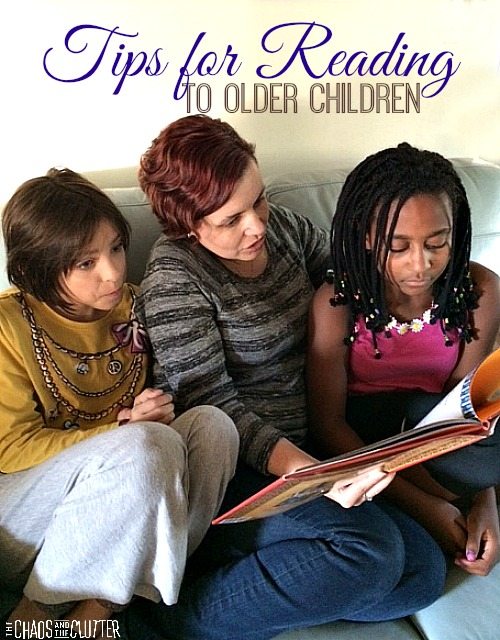
Reading to your kids doesn't have to end when they are old enough to read on their own. Reading to older kids strengthens bonds, increases curiosity, improves communication, and creates a lifelong love of learning.Last week, I made little tea sandwiches and I read at the table while they ate their sandwiches and sipped tea. I’ve found that the best way to make these read aloud sessions successful is to allow the kids to do other things quietly while I read.

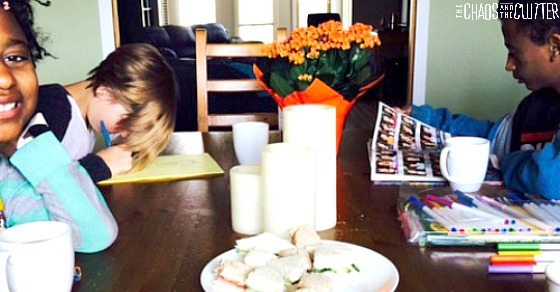
tea sandwiches

My girls often knit, crochet or colour while I read and the boys usually colour or play with Lego. These quiet activities allow them to still listen to the story without getting restless.

Some people believe that reading aloud to their kids ends when their child starts reading on their own, but reading to my older kids has been a wonderful way to learn together, spend time together, facilitate discussions, and introduce them to some of my favourite childhood books. Reading to older children strengthens bonds, increases curiosity, improves communication, and creates a lifelong love of learning.

Tips for reading to older children:

  1. Let them have some say in the books you read. You may have an agenda for what books you want read in a month or a year, but allowing your child to have some input as to the order you read them in or to choose an additional book to add to the list will help them to feel involved and be more attentive.
  2. Use the books as conversation starters. Reading aloud is a wonderful way to bridge discussions on topics that you may not know how to bring up. As kids get older, you can choose material that leads into conversations about relationships, choices, religion, intimacy, addictions, abuse, and other relevant subjects.
  3. Allow the books to lead to other learning. If my kids have questions about something in a book we are reading, I will often set the book down and we will go to the computer and research the answer together. This helps bring alive what we are reading. Two recent examples: In Secrets in the Woods, we were immersed in a chapter about kingfishers, but the kids had never seen one and wondered what they looked like. Once we had seen several pictures of the birds online, they were much more engaged in the story. In The Saturdays, there was a reference to a painting done in the 1800s. We were not able to find such a painting or the artist, but it led to a lively debate about whether the painting was fictitious or not.
  4. Ensure that the reading time is a positive one. If you are demanding that your child sit up straight, pay perfect attention, not ask questions, and do long reports on each book read, your child is not likely to look forward to your reading time. If you are relaxed and the experience is positive, it will only further your child’s interest in books. Though we often read chapter books, we also read a few short picture books every week
  5. Create a relaxing environment. Sit under a tree on a blanket on a warm day, cuddle up in bed under the covers, pile on the couch, sip tea and eat scones, let your kids play quietly. When the weather is nice, we often read on the trampoline outside. I let them bring blankets and we all pile on and relax while we read. They also like sitting on the bean bag chair in the homeschool room while I read. I often let the kids quietly flip through picture books, draw, colour, or play with Lego while I read to them. This helps them to relax further.
  6. Use audio books some of the time. Audio books are a nice change. Once your kids are used to listening, they will enjoy the odd audio book and you will enjoy the break for your vocal cords! When you find a well done audio book, the listener is truly transported into the story. If they get used to being read to aloud, they will have more of an attention span for audiobooks which comes in especially handy on long road trips. We’ve listened to many good ones. The Ramona Quimby audio collection is great. So is The Silver Chair, the BBC version of the Wind in the Willows and so many others.
  7. Let them see your enthusiasm! Choose books that you love. Talk about the magic of being swept away to a distant land or time in history. Let your love of books shine through. It’s contagious!

reading tea partyBonus tip: Once in awhile, throw in a book that has a movie version or one that will soon be coming to the theatre or even one that a high school in your community is doing a live play version of. Watching the movie or going to see the play after you have finished watching the book is a great treat and it allows for further discussions on ways that the book differed from the movie or performance. We are reading The Jungle Book right now with plans to make a special day of going to see the new Disney movie when it opens in theatres in the Spring.



I also often plan an entire unit around a book including crafts, food, activities and sometimes, even a field trip. Here are some of the book activities that we have done:

The Secret Garden

The Black Book of Colours

Have You Filled a Bucket Today?

The Kissing Hand

Charlie and the Chocolate Factory

Today, I Feel Silly

Jump!

A Bad Case of Stripes

Fancy Nancy

Click, Clack Moo. Cows That Type

The read-alouds we’ve used lately:

Wonder
Prayers That Changed History
Sarah, Plain and Tall
The Jungle Book
The Saturdays
King Arthur and His Knights at the Round Table
Secrets of the Woods
InLinkz.com


If you are looking for fun or interesting activities to accompany your books, you may want to follow my Book Activities board on Pinterest.

Filed Under: Homeschooling, Parenting in the Chaos

Parenting a Child with Food Allergies

Parenting a Child with Food Allergies: what you need to know plus tips and encouragement

By Sharla Kostelyk

When you parent a child whose life literally depends on not being exposed to a certain food, the seemingly benign term “food allergies” becomes a terrifying one.

Growing up, my brother had an allergy to pork, something my mom discovered when he was 3 years old. As a baby, he cried a lot and used to scratch his skin to the point of bleeding. He also had a hard time sleeping. My mom knew something wasn’t right but it wasn’t until a particularly bad episode after she watched him eat a lot of sausage at a family gathering that she pieced things together. His reactions became more severe over the years and eventually, we didn’t have any pork in the house.

I also have food allergies myself to strange things (celery, broccoli, bananas, and processed cheese), but they are not life threatening.

Parenting a Child with Food Allergies: what you need to know plus tips and encouragementWhen I was a teenager, a second or third cousin of mine (whom I had never met), died of a peanut allergy while on a trip to Europe with her school. Hearing the story was shocking and the first time that I ever considered how serious allergies could be. I later heard the story again when a high school teacher of mine recounted it to the class because she had been one of the chaperones on that fateful school trip.

My first two sons have no allergies other than skin reactions to medical tape. Our daughter Miss Optimism began showing signs of being prone to allergies as a baby. We just didn’t realize it at the time.

She had cradle cap, which many babies get. Our oldest son had had a mild case of it himself. But hers was not a mild case and nothing we tried seemed to help. We eventually had to use a prescription because it was so severe that it made her head bleed. We learned from the doctor that severe cradle cap is sometimes tied to eczema, a skin condition our daughter developed while still a baby.

Sometime before she turned one, Miss Optimism developed a severe ear infection and was put on antibiotics. We gave her one dose of penicillin and immediately, her torso was covered in huge, red hives. She also seemed to be having a harder time breathing. We called the pharmacist and doctor and of course discontinued the penicillin and gave her an antihistamine. She was then labelled as having an allergy to penicillin and we were talked to about the possibility that she may have the triad of eczema, allergies and asthma. The asthma appeared less than 2 weeks after her third birthday.

I don’t remember the first time Miss Optimism had a reaction to tree nuts. I don’t even remember which nut it was she had a reaction to. I do remember the first time I had to call an ambulance.

That day , we had had a Valentine’s party here. We had invited a bunch of kids over, done crafts, played games, eaten fun food, and said good-bye to the last of the guests. Some of the kids who had come had brought Valentines cards and treats with them. I was too busy with all the hubbub to take much notice of what treats came in.

Miss Optimism was five at the time, but because of some of the medication she was on for her lungs was very tiny for her age. She was the light of our life and in an instant, it seemed that that light could be extinguished.

I was in the kitchen cleaning up from the party when one of the other kids called out “mom“. I knew, just knew. I heard something in their voice, knew in that one word. As I ran to the next room, I grabbed the phone on the way, knowing I would need to call for help. I saw her struggling for air and called 9-1-1 before my brain fully registered what was happening. There was a candy wrapper on the floor and I was able to piece it together. The chocolate was a popular brand and it did not contain a “may contain nuts” warning anywhere on the packaging, but it was manufactured in a factory where hazelnuts are used.

I gave her an antihistamine, held her and prayed while we waited for the ambulance to arrive. We had known before that day that her allergy was serious, known even that it could kill her, but knowing and KNOWING are too different things. That day changed everything.

After that day, I became obsessive about reading labels, not letting her go to birthday parties without me, asking questions of other parents, worrying whenever she wasn’t in my sight.

Miss Optimism is 13 now and still lights up our world. She has become her own allergy advocate and even her sweet tooth doesn’t get in the way of her making sure something is “safe” before she eats it. I no longer worry when she isn’t with me that she may accidentally eat something she shouldn’t. She carries an epi-pen and has been trained on how to use it. She smells food before she puts it in her mouth, even if she has asked about nuts and been told there aren’t any. Her tongue and throat will get itchy from the smell if it does contain nuts so she uses that as an extra precaution.

Our life is affected by allergies, but not defined by them. Our son Einstein is on a gluten free diet for his Aspergers (it has made a huge difference) and another of our sons is lactose intolerant, so I have had to adjust the way I cook and the way I shop, but it is possible to live a fairly normal life even if your child has food allergies or intolerances.

Tips to parenting a child with food allergies:

It is never too early to start training your child to be their own advocate. As soon as they are old enough to talk, teach them to ask about food before they eat it.

Teach them to ask 3 questions:

“I am allergic to __________. Is this food safe for me to eat?”

“Are you sure?”

“Did you make it yourself?”

Be their advocate. Educate friends and family about the importance of being food-aware and the many ways allergens can be hidden in foods.

Read labels. Ask questions.

Don’t take chances. It goes without saying not to take chances in exposing them to what they are allergic to, but also don’t take chances when it comes to a reaction. When in doubt, call an ambulance. Reactions should always be taken seriously.

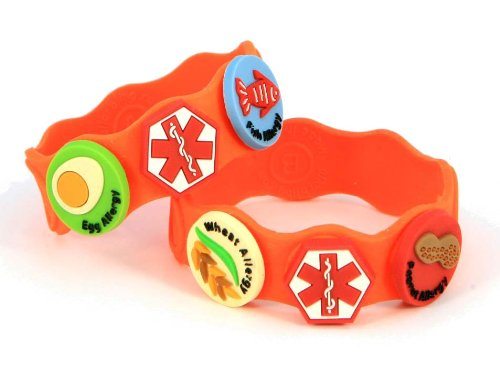
Get your child a medic alert bracelet. If ever a reaction causes them to lose consciousness, this will alert those on the scene to what is going on and help paramedics and medical personal to treat your child. For our daughter, we have an Allerbling bracelet. You can buy them with different “charms”. She has had it for years and we love it. It is made of silicone, so it’s great for those with allergies to metal or latex and it is the only type our daughter will keep on because of her sensory issues.

kid friendly Medic alert bracelet for food allergies

When your child is old enough, have them help with cooking and baking. This will give them a better understanding of how there can be hidden ingredients in food items.

Train the people in your child’s life how to use an epi-pen. The one we use now actually literally talks a person through the process. (yes, a talking epi-pen!) Be sure that instructors, care givers, teachers, friends’ parents, grandparents, anyone who will have contact with your child knows how to use an epi-pen and is willing to do so.

Be prepared. An epi-pen can save your child’s life. Carry an extra. They are expensive, but not having one with you could cost a lot more than you want to consider. Also carry an antihistamine. I have antihistamine in my vehicle, in my purse and at home. My daughter is now old enough to also have one in her bag.

Educate yourself. Know the signs of an allergic reaction in your child and other possible signs that could occur. Their reactions and even their allergies can change over time.

If your child has an anaphylactic allergy, do not allow that food in your home. No exceptions. You may even choose to hang a sign on your door.

If they have an intolerance, you can choose whether to adjust meals for the whole family or just for that particular child. For our son with the gluten intolerance, I sometimes cook gluten free for all of us and other times, just adapt his meal.

Parenting a Child with Food Allergies - what you need to knowLearn to let go. You won’t be able to go to college with your child to read labels before they eat. You know your child best so you will know when they are ready to start attending events without you where there could be potential for allergens to be present. It’s hard to let go but take small steps towards it to build up their self-advocacy skills. Start with safer environments where you have already briefed the adults present.
Once precautions are taken, they can lead a normal life. It takes time to adapt for the whole family to adapt, in particular if there are several food allergies, but life can return to normal.

Extra reading for food allergy parents:

Some of this reading is for you, while some is to help you educate those around you so that they can help you through this journey with your child.

4 Easy Ways to Help a Food Allergy Mom

Everything You Need to Know About Food Allergies and Food Sensitivities

What Parents of Kids With Food Allergies Want You to Know (but are afraid to say)

Special Dietary Needs: A Beginner’s Guide for Parents

5 Ways to Prepare Your Allergic Child to be Safe at School

Join me for a free 5 part email series, Little Hearts, Big Worries offering resources and hope for parents.

Filed Under: Parenting in the Chaos, Special Needs Parenting

Supporting a Family Whose Child is in the Hospital

By Sharla Kostelyk

For four years, our daughter, Miss Optimism, battled a lung disease. For four years, she was in and out of the hospital. For four years, we worried that we would lose our precious little girl.

It was one of the hardest seasons we’ve walked through in our lives. Miraculously, we were able to find a medication that turned things around for her. We take her every two weeks to get two injections and other than that, her life has been pretty normal for a number of years now, but we are always aware how blessed we are to have her here with us and to have her healthy.

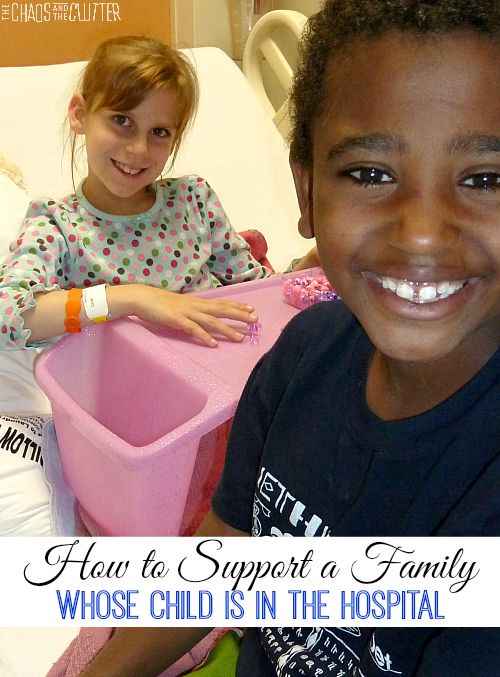
Ways to support a family whose child is in the hospital or has a chronic illness. This is a really great list.The days of monitoring her every breath, of middle of the night rushes in to Emergency, of surgeries and test results, of night nurses in our home, of our minutes being led by lung function numbers and of wondering if today could be her last are behind us and I am so thankful.

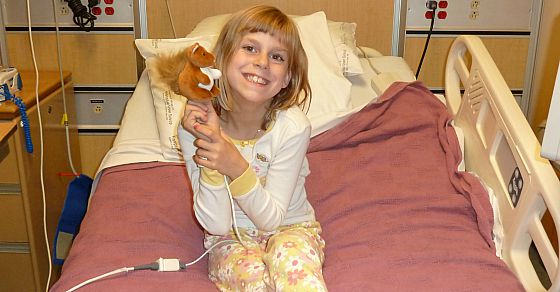
Those years spent in worry and with the stress of trying to juggle her health crisis with raising our other kids and managing day to day life are still easy to bring to memory so I thought I would use our experience to help other families who are living through a similar time now.

I have compiled this list of ways of supporting a family whose child is in the hospital or suffering a chronic or terminal illness to help family and friends best support them. I wish there had been a list like this when we were in our crisis so that I could have pointed others to it when they asked what they could do to help.

I created this list with the help of my friends Shannon and Lindsay. Shannon’s beautiful daughter spent her first 6 months in hospital after being born at 25 weeks gestation and has undergone many surgeries and long hospital stays since then. Lindsay’s little guy bravely battled cancer as a young preschooler and won. I’m honoured to know these amazing women and I’m glad that they were willing to share their insight to help others.

Ideas for supporting a family whose child is in the hospital:

Reassure them that they are good parents.

When they have to hold their child down for a painful medical procedure or make difficult decisions in which no one answer seems like the right one, they will be questioning their worth as a parent. They need reassurance.

Offer to watch the other kids.

I cannot emphasize this one enough. It is impossible to be in two places at one time and as the parent of a sick child, your heart is at the hospital. Not being able to be there with your child because you have to watch your other kids is torturous. Mind you, when you’re at the hospital, you’re also battling guilt for not being with your other kids. Offering to help with child care lightens the load for the family.

Take the other kids to do something fun.

The siblings of a sick child are also affected by things that at a young age, they should not be thinking about such as worrying about their parents and worrying about their brother or sister. They are also wrestling with mixed feelings because they may feel selfish for wanting more of their parents’ attention when they know why the sibling is getting it.

The parents are also feeling a tremendous amount of guilt for what their other kids are going through and what they are missing out on. Taking the other children to do something fun, even just going to a playground for a few hours will not only take their minds off things for awhile, it will take some of the burden of guilt off the parents.

Bring meals.

Going grocery shopping and cooking are low on the priority list for the family at this point. Bring a dinner or drop off some freezer meals. You can even get together with others who know the family and organize making a lot of freezer meals for them. (You can make ten beef dump or chicken dump recipes in one hour.)beef and chicken dump recipes

If cooking isn’t your thing, bring a pizza gift card or a grocery gift card. Drop off a jug of milk and loaf of bread.

Give money.

Until you’ve been there, you don’t realize how expensive it is to have a child in the hospital. The cost of parking alone is enough to cripple a budget. Then there are expenses like gas to drive to and from the hospital, meals, lost wages, and child care for the other kids. Since we are Canadian, the only addition medical expenses we incurred were prescriptions (and that was hundreds of dollars a month), but in most countries, there is also the cost of medical bills from the hospital stay.

A family whose child is battling illness has enough to worry about without the added stress of finances. Give what you can or pay for a hospital parking pass or gift card for food nearby or gas station gift card. If the family doesn’t have insurance, a larger fundraiser may be needed.

Offer to be the contact person.

It is so helpful for the family if there is one person who can field phone calls, pass on information, update facebook pages, pass along prayer needs, manage Carepages, organize meal needs, pick up donations, etc.

It can become exhausting for the family to have to repeat the same updates over and over, particularly if the news is not positive.

Be a shoulder.

Be there to listen. Simple as that. You don’t need to have the answers or to have been there yourself to just listen.

Don’t shut them out.

Be a friend by still talking to them about what’s going on in your life. You may feel like your trials are trivial compared to theirs and therefore not want to share, but they need distractions and they need to feel as normal as possible. Shutting them out of your life will not protect them. It will only add more hurt.

Bring the fun to them.

While they may not be able to attend dinners out or events, go to their home or the hospital just to hang out with them. It gets lonely there. I used to long for adult company. Bring a laptop with a funny movie or come armed with jokes! Distraction can be a good thing.

Offer to bring food.

If you are going to the hospital to visit (much appreciated by the way), ask if you can stop and bring them some food. When our daughter was at her sickest, I didn’t want to leave her side so I could only eat when visitors would bring me food. Sometimes even just a tea from a familiar coffee shop brought a sense of normalcy and comfort.

Bring something for the child who is sick.

This does not need to be extravagant. This can be as simple as a homemade card or sign with their name on it. It will show their parents and the child that you are thinking of them. It doesn’t hurt to bring something for the other kids too. They are feeling pretty left out as it is.

One year when Miss Optimism had been in and out of the hospital a lot and was not allowed to go outside for many months, a blog reader of mine sent a huge box of books, crafts and activities to keep her busy and cheer her up. She included a board game that all the kids could play, a few treats for the other kids and even some hot chocolate mix for me. It was such a blessing and an encouragement!

Tell the family you are praying for them.

And then actually pray. It’s been my experience that even families who are not faith-based appreciate all the prayers they can get when they are in this type of crisis. You can’t really go wrong with this one.

Ask questions.

Don’t be afraid to ask questions. The family want people close to them to be informed and able to help in any way they can. Do be sensitive though.

One day when we had gotten some hard news about our daughter, a friend texted and asked me what her life expectancy was and whether or not she would be able to have children. Those were not questions I felt were appropriate to ask via text message and was paralyzed by the thought of typing an answer.

Sit with their child.

If you come to visit, offer to stay for a bit with the child so that the parent can go to the bathroom, have a shower, go for a walk, go get something to eat, make a phone call in private, or get some fresh air. Those are things most people take for granted but they are hard to come by during a hospital stay.

Ask what you can do.

Maybe they need you to tackle their laundry pile. The family still needs to wear clothes and chances are, that pile is rising by the day and just another source of stress for them. Maybe there are errands that need to be run or things that need to be fixed around the house.

Team up with others.

Of there is a group of you, sit down and figure out who would like to do what and come up with a schedule. That way, the family’s needs can be met and in a more organized way (though disorganized help is still appreciated!).

Be there on big days.

On big days like test results or surgeries, offer to go and sit with the family during the wait. And then, just be there. Hold their hand.

Treat the child who is sick normally.

The child battling illness is still a child. They need to have as much normalcy as possible and that starts with the way others treat them. Talk to them. If hospital policy allows it and the parents agree that it would be a good idea, bring your children to visit them too. Hospitals can be lonely places.

Help their marriage.

Offer to watch the other kids or stay at the hospital with the child who is sick so that the parents can have a date night. Divorce rates are higher among families who have children with a chronic or terminal illness and helping them to protect their marriage is important. Acknowledge the need for them to still be a married couple in the midst of everything they are going through.

Be places they can’t be.

Chauffeuring their other children to lessons or appointments or events, videoing performances and recitals for the parents to watch later. These things are invaluable.

Help with paperwork or note taking.

Often especially early on after a diagnosis, it can be hard for family members to process and remember what doctors are saying. Having someone there to take notes during meetings with the medical team can be very helpful. Also, having someone write a list of questions they want to ask the doctors during the next meeting is a help as well.

Along with a hospital stay comes paperwork. Helping the family fill that out can also lighten the load.

Sitting with one of the parents and helping them come up with a to-do list and then helping them decide how to delegate those tasks is a blessing.

Comprehensive list of ways to help a family whose child is in the hospitalOther ways to help:

  • clean their vehicle. It can become a dumping ground with all the trips to and from the hospital.
  • buy groceries/stock their pantry (healthy food options help reduce parent’s guilt)
  • summer: water grass, maintain their garden, mow the lawn
  • winter: shovel snow
  • vehicle maintenance including oil changes and gassing up
  • lend an iPad or eReader if they don’t have one
  • go to the Nurse’s station with the parent’s questions if they don’t want to leave their child’s side
  • make and deliver healthy lunches to the school where the other kids go or organize some make ahead school lunches. This daily chore can be overwhelming for parents who are hardly ever home.
  • when visiting the hospital, recognize if the parents are needing rest and keep visits short
  • on hospital visits, keep the noise level down, be respectful of other patients in shared rooms, be kind to hospital staff as your treatment of them reflects on the family
  • make them a playlist of uplifting music
  • double check to see if they have a phone charger and bring one if they don’t. In emergency situations, there isn’t time to grab a charger on your way out and it is so needed in the hospital.
  • give treats to parents – iTunes gift card, lotions, chocolate, snacks, family movie passes

Join me for a free 5 part email series, Little Hearts, Big Worries offering resources and hope for parents.

Filed Under: Parenting in the Chaos, Special Needs Parenting

Why I Marched My 12 Year Old Into the Police Station

Why I Marched My 12 Year Old Son Into the Police Station (or knowing when something is a mountain and when it is a molehill)

By Sharla Kostelyk

I know that in writing this that there will certainly be those who disagree with my decision and I’m okay with that because parenting choices are one of those things that people have strong opinions about, which is understandable. Those who don’t disagree with my decision may still disagree with me choosing to share it in such a public forum and I have to admit that I am on the fence with that one myself.

I am always looking to find that balance between helping other families and protecting the privacy of my kids. In this case, I happen to have two sons who are the same age which provides a small layer of anonymity since there is a 50/50 chance I’m talking about the other one! In the vein of putting my kids’ first, I am also going to gloss over some details. If you are, or have ever been, the mother of a 12 year old child, I assume that you will be able to read between the lines somewhat!

Why I Marched My 12 Year Old Son Into the Police Station (or knowing when something is a mountain and when it is a molehill)Image Copyright: jgroup / 123RF Stock Photo

It was a Tuesday. He was having a day where he was attempting to assert his independence more boldly than usual. For a 12 year old boy, trying to find the edges of those lines is not uncommon.

On this particular day, we had an appointment for his sister that we were running late for. He didn’t want to come, but I was going to be gone most of the day and him staying home was not an option. Things went rather downhill from there.

There were refusals; there were words. We were very late for the appointment. It was downtown in the city nearest to us.

Following the appointment, there was a 20 minute standoff in a parking lot because he refused to put his seatbelt on and I refused to drive without him buckled in. Eventually, he let out a big sigh and I heard the click.

Just a few short blocks from there in heavy traffic, the kind that you only see in cities in rush hour or anytime in construction season (where we live, anytime there isn’t snow on the ground is construction season), there was almost an accident in front of me and I had to slam down hard on the brakes.

Unbeknownst to me, this same son of mine had unbuckled his seat belt the minute I had taken my eyes off of him. Unrestrained, he flew forward and hit the seat in front of him with such force that the following day, he had a large scrape and bump on the upper bridge of his nose.

I explained again the importance of his wearing his seatbelt and pointed out that not only was he risking his own life, he was also endangering others because if we were to be in an accident, he could essentially become a projectile, a potential problem especially for the brother seated directly in front of him.

There were eye rolls and tone and grumbles but the was buckle was clicked in once again. Until…I wasn’t paying attention to him and was instead paying attention to the road when he unbuckled it again. And again. And again.

I try to be a “yes” mom. I choose my battles. I know better than to lock horns over trivial things. I know a molehill and I know a mountain. This was a mountain.

[easy-tweet tweet=”I know a molehill and I know a mountain. This was a mountain.” user=”chaosandclutter” hashtags=”#parenting”]

I calmly explained to him that not wearing a seatbelt was against the law and that if he took it off again, I was going to have to involve the police. He took me up on my offer.

I had five kids with me and a list of errands that had to be done a page long and we had company coming over for supper that evening and I knew the house was still a mess. Since we were already running behind because of being so late for that first appointment and the 20 minute seat-belt-standoff in that parking lot, I didn’t have time for an extra stop that day. I did not WANT to turn around and drive to the police station. But I did.

When we arrived, said son did not want to get out of the van to go in. I stated that it was his choice but that either way, I was going to go in and ask for an officer to speak to him. I suggested that if an officer had to come out to the parking lot to talk to him because of his refusal to go in, they might be more frustrated. He chose to come in.

I think all of my kids were shocked that I was following through with my threat. When we got inside and took a number, reality set in for him and he started begging me not to go through with it.

“Mommy, I’ll wear my seatbelt. I promise. We can leave now.”

There were 5 people in front of us so it was a substantial wait, but I stood my ground. When our number was called, I walked up (I was shaking inside and super nervous but tried not to let the kids see that) and apologized for coming in for something that was wasting their valuable time. I explained that my 12 year old son refuses to wear his seatbelt and that it is unsafe for me to drive with the distraction of having to check his seatbelt status every few minutes, not to mention that it is illegal and risks his life.

There was a bit of a process, but eventually an officer came out to speak with him. She told him that she had been to car accidents where those who were wearing seatbelts walked away and the one who wasn’t was thrown from the vehicle and died at the scene. She explained that if she were the officer to pull us over because he wasn’t wearing a seatbelt, she would have to issue me a ticket but she would expect for him to have to pay it. She also said that the next time he takes his seatbelt off while I’m driving, she suggests that I should pull over and make him walk home.

He was embarrassed and unbelievably angry with me, but he has worn his seatbelt without a word of protest since.

So why did I march my 12 year old into the police station for something that some would say is not that big of a deal?

Why I Marched My 12 Year Old Son Into the Police StationIt’s very simple. A seatbelt can make the difference between living and dying and if my son isn’t going to listen to me on a life and death issue, I’m going to make darn sure that he understands that there are consequences to that.

Because the next time I’m trying to talk to my son about something that is a life and death issue, it may be about drugs or about drinking and driving or about gangs and I want him to know that I am serious.

But my biggest reason is this: I want him to know that his life is valuable to me. It might not be valuable to him at the moment (whether that is because of his trauma related issues or because he is young and he thinks he’s invincible because his frontal lobe hasn’t fully developed), but I need him to know that it matters to me.

His life matters more than getting my groceries on 15% off day or getting the house clean for company or even getting supper made on time (it was ready an hour and a half after they arrived incidentally, but everyone survived). His life matters more than my own embarrassment or my concern about what others are going to think of me.

I need him to know, really know, especially going into the critical teen years, that I will drop everything else in those crucial moments.

I need him to know the difference between a molehill and a mountain and to know that to me, his life is a mountain.


Filed Under: Parenting in the Chaos

  • « Go to Previous Page
  • Page 1
  • Interim pages omitted …
  • Page 5
  • Page 6
  • Page 7
  • Page 8
  • Page 9
  • Interim pages omitted …
  • Page 12
  • Go to Next Page »

Primary Sidebar

Categories

We are a participant in the Amazon Services LLC Associates Program, an affiliate advertising program designed to provide a means for us to earn fees by linking to Amazon.com and affiliated sites.

Copyright © 2026 • The Chaos and the Clutter • Site Design by Jeni @ The Blog Maven

Return to top of page

Copyright © 2026 · Chaos and the Clutter 2.0 on Genesis Framework · WordPress · Log in