• Skip to primary navigation
  • Skip to main content
  • Skip to primary sidebar
  • Home
  • About
  • Contact
  • Privacy + Terms
  • Affiliates

The Chaos and the Clutter

  • Facebook
  • Twitter
  • Pinterest
  • Google Plus
  • RSS
  • Email
  • School at Home
  • Sensory
    • Sensory Processing Disorder
    • Awesome Sensory Play Activities
      • Sensory Bins
      • Sensory Bottles
      • Sensory Bags
  • Family Games
    • Minute to Win It Games
  • Special Needs Parenting
    • Childhood Anxiety
    • Reactive Attachment Disorder
    • Sensory Processing Disorder
  • Store
  • Course Login

Sensory

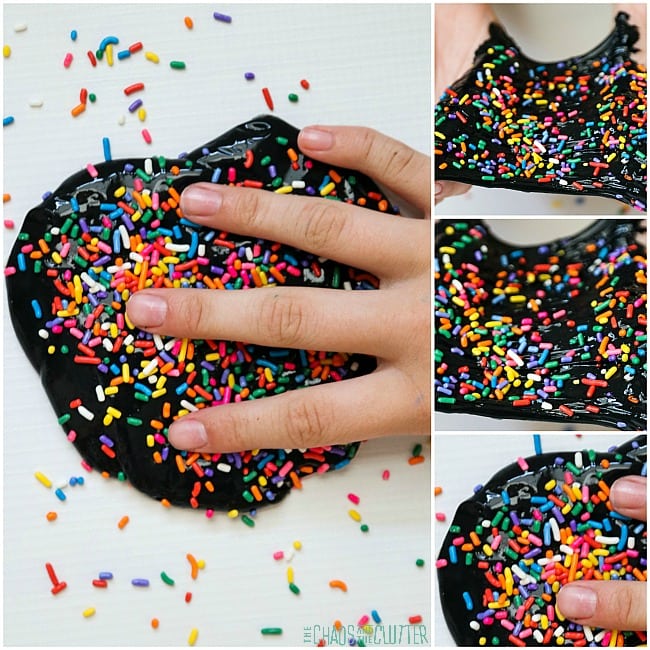
Rainbow Confetti Party Slime

By Sharla Kostelyk

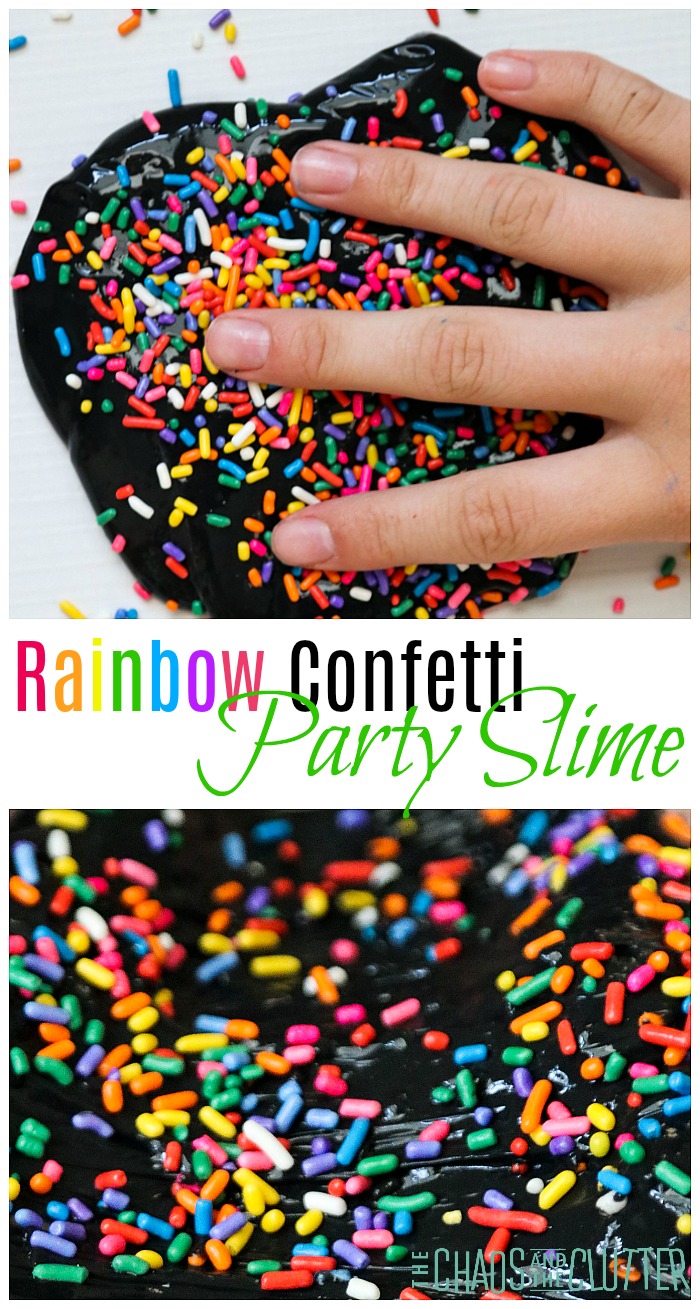
Whether you are new to the slime craze train or barreling full speed ahead down the tracks, you’ll love this simple rainbow confetti party slime. Rainbow Confetti Party Slime #slime #sensoryplay #slimerecipe #kidsactivities
My kids are fully on board the slime train, so we have had the chance to make many types. By adding a small twist to each type, they never seem to get bored of it.

As with all slime recipes, supervise younger children, wash hands and surfaces that come into contact with the slime after playing, and avoid contact with clothing and hair.

Trust me on this one: slime and hair are a nasty combination!

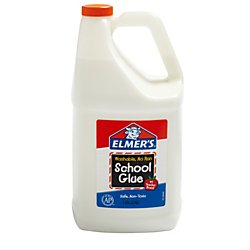
Although I experiment with different types of slime, I prefer glue based slimes as they seem to have the best success rates. The type of glue you use matters, so rather than experiment, I suggest you use Elmer’s Washable School Glue. It’s tried and true.

There are many times when I suggest buying items from the dollar store or using a no-name brand, but this is not one of those times. If your kids are fully hooked on making slime, I suggest buying it by the gallon!

Rainbow Confetti Party Slime Recipe:

  • 1/2 cup Elmer’s white glue
  • 1/2 cup water
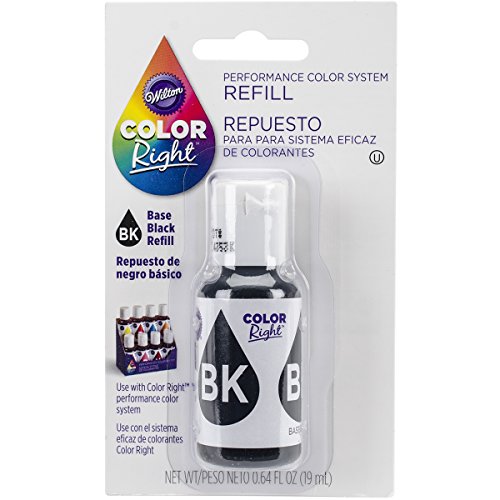
  • Wilton Color Right liquid (black)
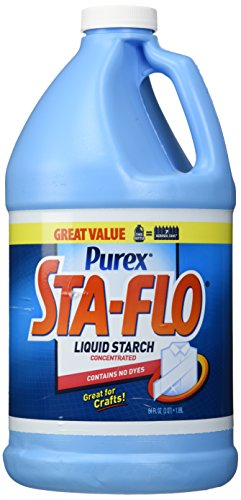
  • 1/4 cup liquid starch
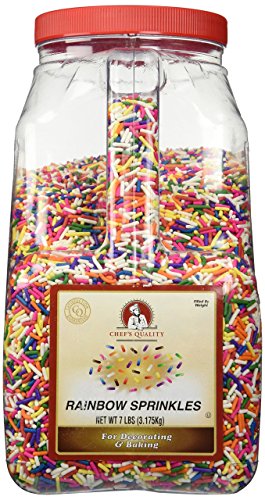
  • rainbow sprinkles

Adult supervision is recommended for making the slime as it does involve a chemical reaction. I like to use the wide popsicle sticks (also called craft sticks) for mixing because I can throw them away afterwards. Spoons work as well of course, but I find the glue a bit finicky to get off after.

  1. In a bowl, mix 1/2 cup of water with 1/2 cup of glue.
  2. Mix in the liquid color.*
  3. Pour in the liquid starch.
  4. Stir. Keep stirring until the liquid is gone and a glob of slime forms.
  5. Knead the slime. It will be stringy and goopy in the beginning, but will quickly become more and more the consistency of slime.
  6. Set the slime down and allow it to flatten out.
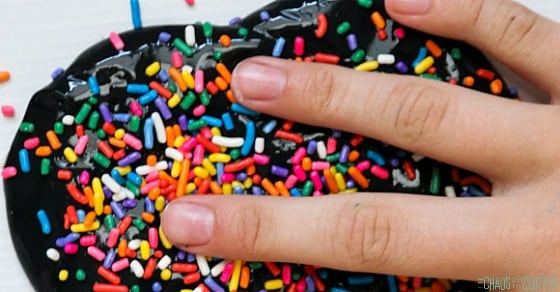
  7. Sprinkle with the confetti sprinkles and let it sit 20 seconds or so.
  8. Pick the slime up from underneath.

Elmer's Liquid School Glue, Washable, 1 GallonElmer’s Liquid School Glue, Washable, 1 GallonRainbow SprinklesRainbow SprinklesWilton Color Right Food Color BlackWilton Color Right Food Color BlackSta-Flo Liquid StarchSta-Flo Liquid Starch

*Gel based food dyes are hard to mix into slimes and even harder to create a uniform colour with. I use a liquid based food dye for this reason.

Note that as the slime is played with, the sprinkles will mix in and lose their coloring, but that’s all part of the fun. Once they are dissolved, it will look like a completely new slime! Slime is great for sensory play. This particular one would be fun to make at a birthday party. Each of the kids could take home their slime in a small plastic container as a party favour.
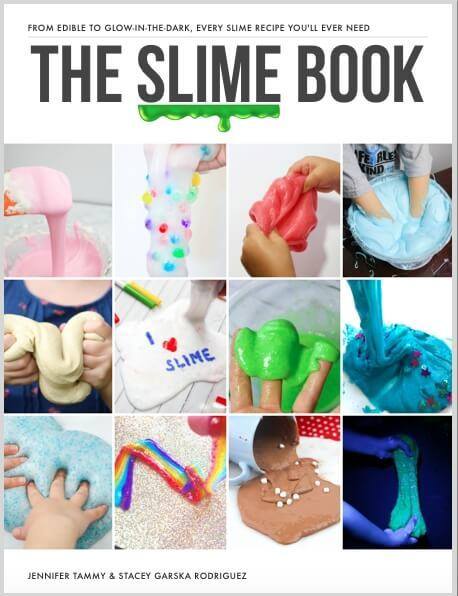
For awesome slime recipes at your fingertips, check out The Slime Book – From Edible Slime to Glow-in-the-Dark Slime – it’s got it all! 
Check out these other slime recipes: 
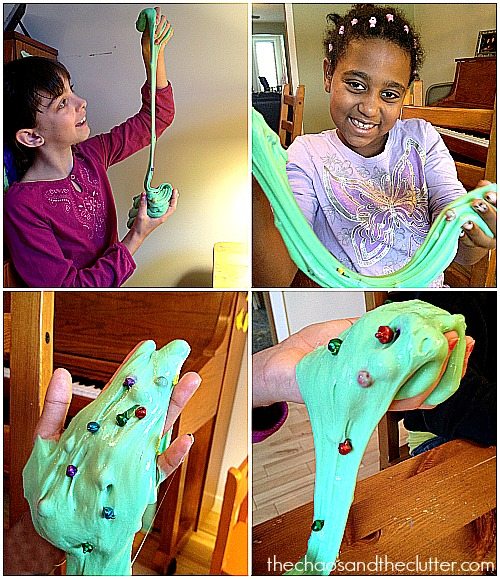
Crunchy Slime With Mardi Gras Beads

Holiday Jingle Bell SlimeHoliday Jingle Bell Slime

Filed Under: Crafts and Activities, Sensory Tagged With: sensory play, slime

Outdoor Sensory Scavenger Hunt for Kids

By Sharla Kostelyk

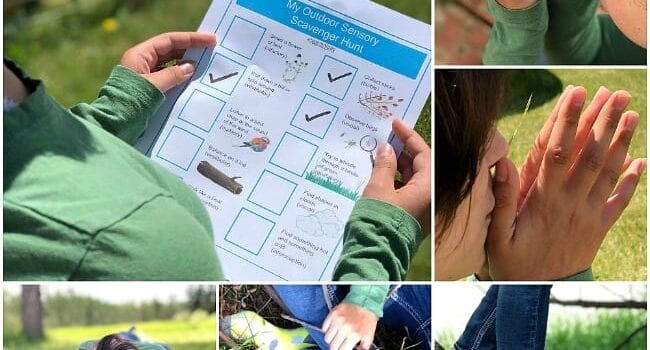
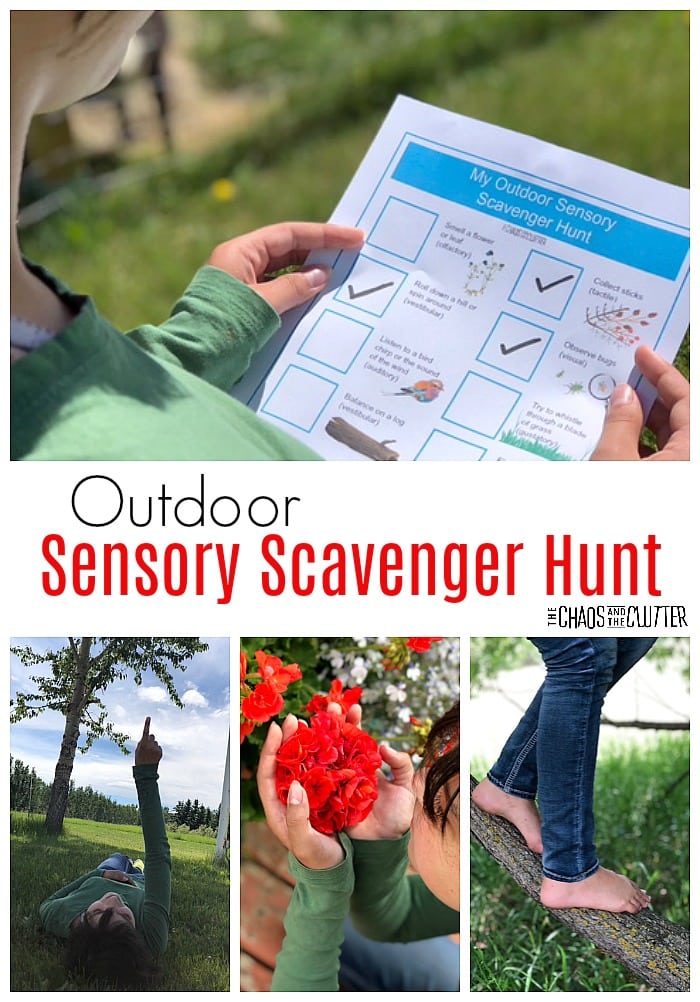
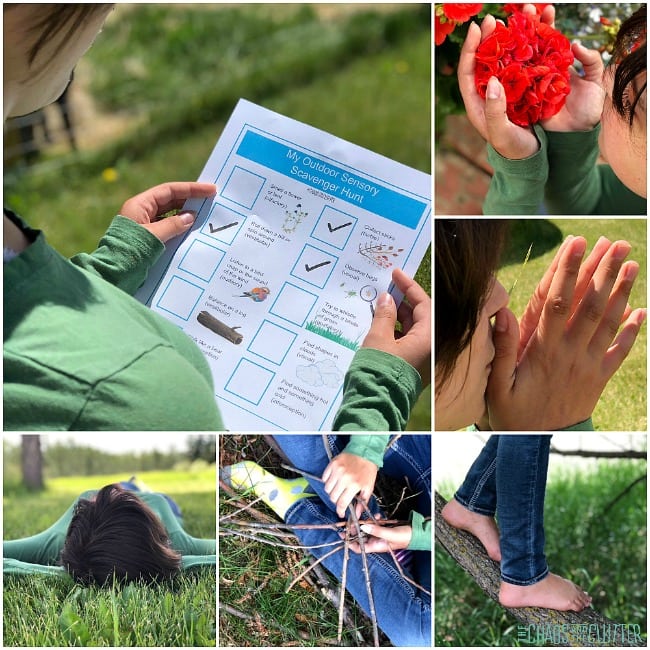
This outdoor sensory scavenger hunt is a great way to not only get kids outside and moving, but to also teach them about all 8 sensory systems. This activity is such a fun way for kids to get their ever important sensory input. Outdoor Sensory Scavenger Hunt #sensory #sensoryplay #sensoryprocessingexplained

This is a great hands-on sensorimotor activity that encourages children to explore their senses and the world around them.

How to create a Sensory Scavenger Hunt:

Setting up this scavenger hunt couldn’t be simpler! Print off the Sensory Scavenger Hunt checklist or create your own. Give each person a crayon or marker along with their sheet. Go outside and begin the scavenger hunt.

This can be done in your backyard, a nature preserve, or park. All that’s needed is the paper, something to mark it with, and a child eager to explore.

Use the activities on the checklist to teach or reinforce the different sensory systems. Each item lists the sensory system that it corresponds to. This is a great way to help kids learn the terminology.
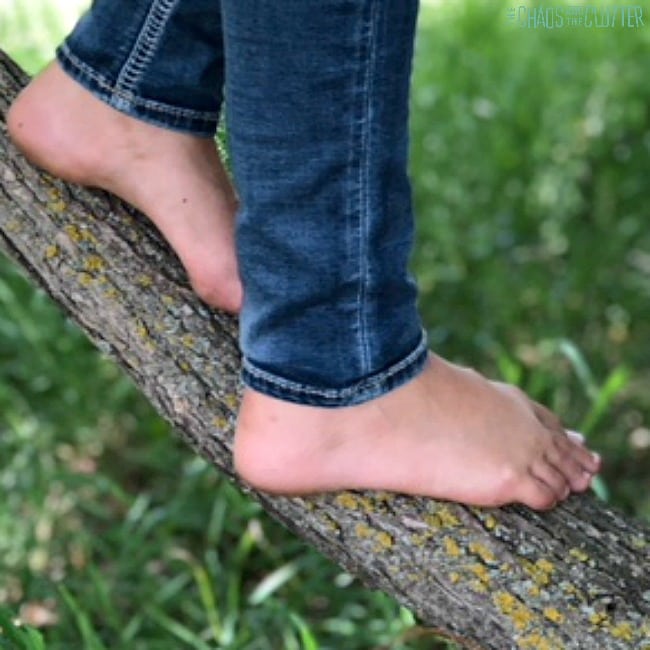

The scavenger hunt includes samples for the visual, auditory, olfactory, gustatory, tactile, vestibular, proprioception, and interoception senses. 

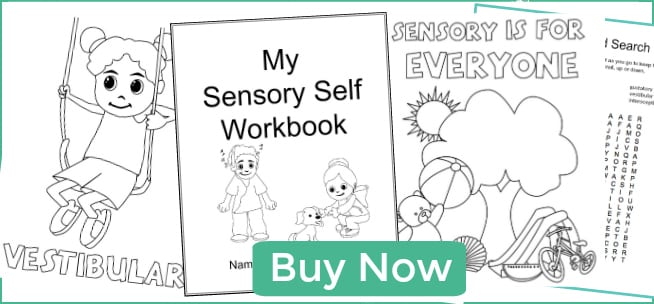
This is an excellent example of a hands-on way to reinforce the concepts of sensory processing that are taught in the My Sensory Self Workbook for Kids. By allowing kids to actually do things representing each sensory system, it will make the concepts more concrete for them.

My kids completely loved the sensory scavenger hunt. They appreciated that it went beyond the usual “finding” that goes on in a typical scavenger hunt. One of my daughters particularly liked the rolling and balancing activities while another preferred being still and finding shapes in the clouds.

This activity is such a fun way to explore nature through your senses! Plus, it’s a great boredom buster.

You can also create your own sensory scavenger hunt specific to your backyard or indoor space. Kids can help design the scavenger hunts as well or help brainstorm additional ideas.
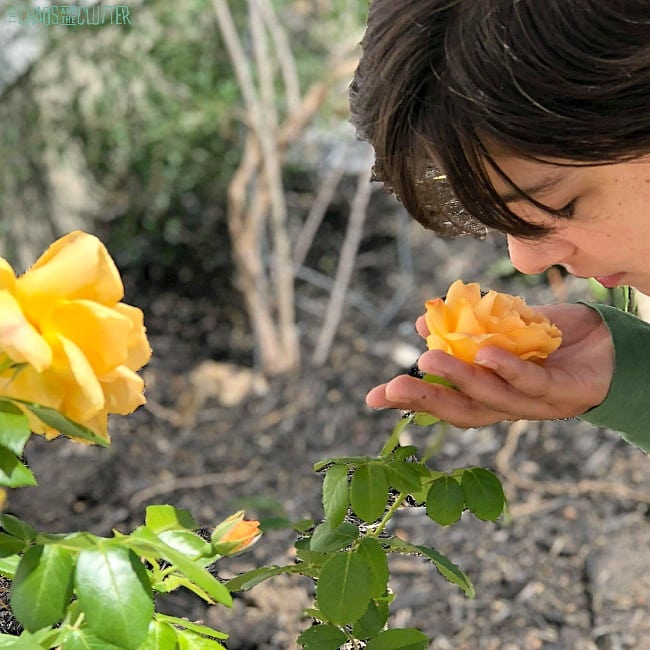
This gets great discussions going about all the different senses and how we can use them.

If your child finds rolling or balancing difficult, you can choose other vestibular tasks to replace those. I also have one daughter who can’t stand the smell of flowers, so while her sister loved smelling ALL the flowers in our yard, I let her smell the grass instead.
To get your free printable Sensory Scavenger Hunt, just enter your email address below. 
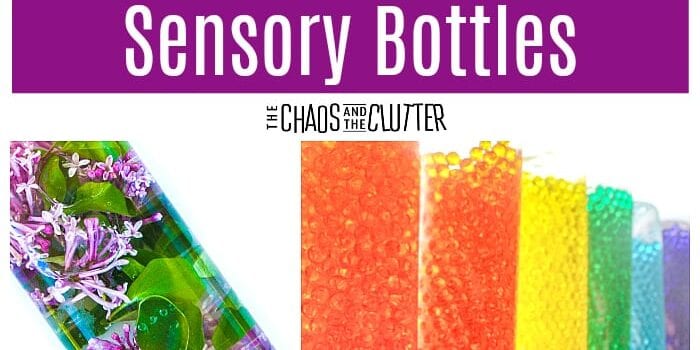
You can also combine this activity with creating a Nature Sensory Bottle or Nature Sensory Bin by collecting some of the items found along the way. Just like that, you’ll have a double dose of sensory fun!

Filed Under: Sensory, Summer Sensory Activities Tagged With: sensory play

The Mega List of Sensory Bottles

By Sharla Kostelyk

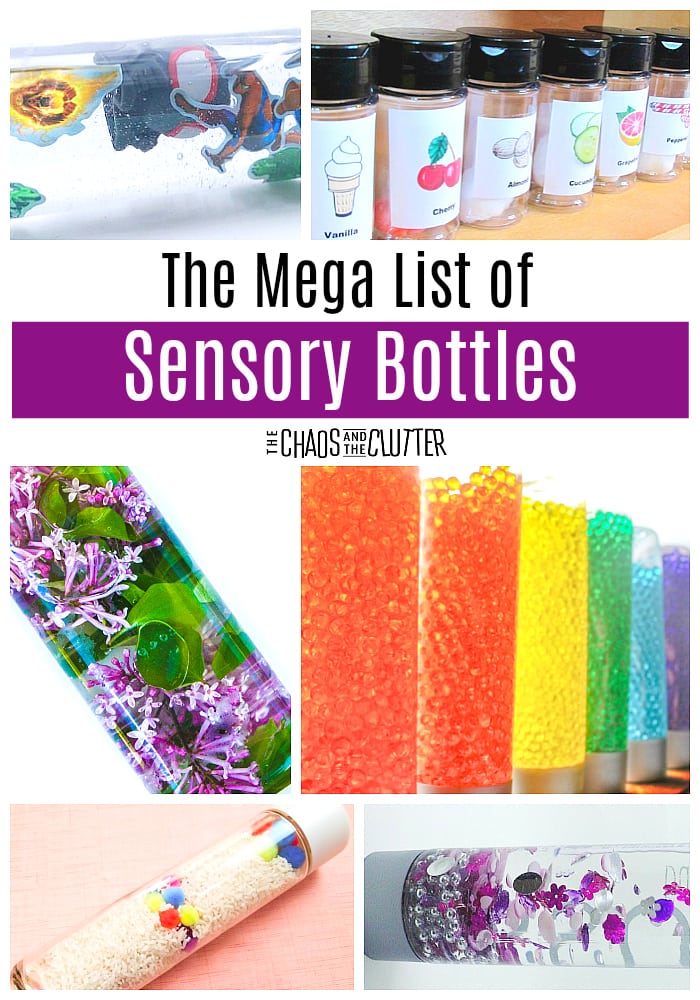
Sensory bottles are easy to make and serve a variety of purposes: exploration, discovery, sensory input, and calming. This mega list of sensory bottles can serve as a how-to or just spark your imagination to come up with your own ideas.

To make a sensory bottle, fill an empty water bottle with the materials you’ve chosen and replace the lid. You will most likely want to secure the lid using a hot glue gun. This is especially important if younger children will be using it. Below, find a video detailing how to make a calm down bottle.

Sensory bottles serve a variety of purposes: exploration, discovery, sensory input, and calming. This mega list of sensory bottles has so many ideas! #sensoryplay #sensorybottles

Sensory Bottles For Anytime:

Glow in the Dark Bottle

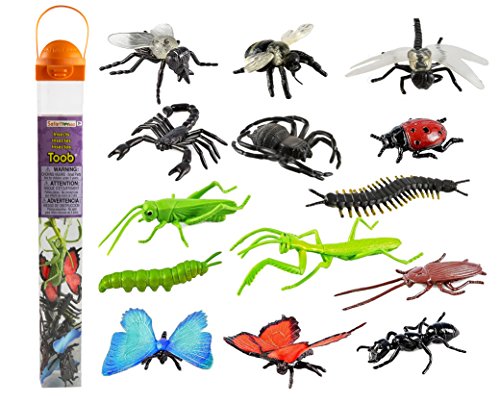
Bugs Sensory Bottle

Football Mini Sensory Bottle

Smelling Sensory Bottles from Things to Share and Remember

Pretty Princess Sensory Bottle here on The Chaos and The Clutter

Button Sensory Bottle from Keep Calm and Mommy On

Water-Bead Sensory Bottles for Babies, Toddlers, and Preschoolers from Living Montessori Now

Lilac Sensory Bottle from Parenting Chaos

Light Saber Sensory Bottles Star Wars Activity for Kids from Little Bins for Little Hands

Superheroes Sensory Bottle from here on The Chaos and The Clutter

Batman Sensory Bottle from Growing Hands-On Kids

Sensory Bottles that Glow in the Dark from Fun-a-Day

American Girls Sensory Bottle from here on The Chaos and The Clutter

Minion Sensory Bottle from Little Bins for Little Hands

Teenage Mutant Ninja Turtle Sensory Bottle Activity by Little Bins for Little Hands

Rice Sensory Bottle from Mama Instincts

Water Bead Sensory Bottles from Parenting Chaos

Despicable Me Minions Sensory Bottle from here at The Chaos and The Clutter

Learning Sensory Bottles:

Van Gogh Starry Night Discovery Bottle

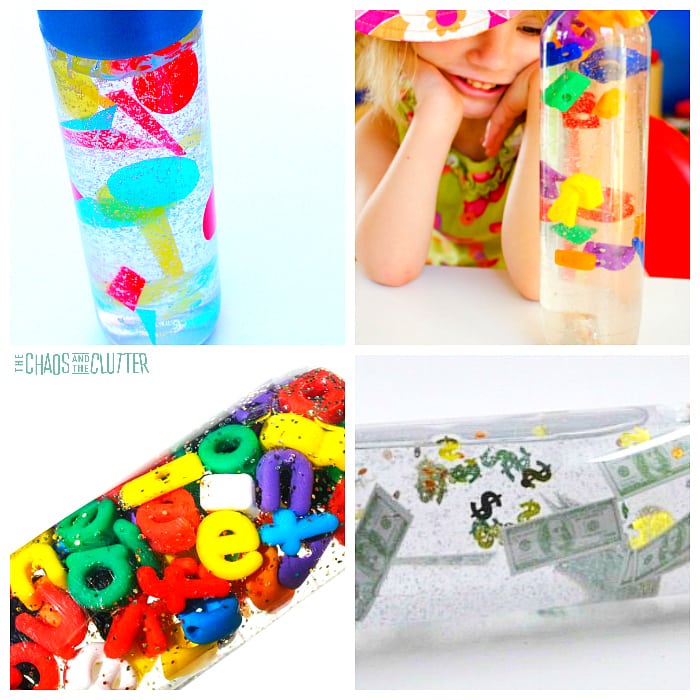
ABC Bottle

Money Sensory Bottle for Math Unit from here on The Chaos and The Clutter

Shark Week Bottle

Nature Sensory Bottle

Alphabet Calm Down Bottle from Preschool Inspirations

Sensory Bottles Used to Explore Shapes with Printables from JDaniel 4’s Mom

Alphabet Sensory Bottle from Parenting Chaos

STEAM Camp: How to Make a Magnetic Field Sensory Bottle from Left Brain Craft Brain

Science Discovery Bottles for Sensory Learning from Little Bins for Little Hands

Nature Inspired Sensory Bottles from Rhythms of Play

Farm, Zoo, & Ocean Animal Sensory Bottles from Living Montessori Now

Zoology Sensory Bottles by The Kavanaugh Report

Rust Resistant Magnetic Discovery Bottle from Preschool Inspirations

Sensory Bottle Biomes for Kids by Parenting Chaos

Exploring Liquid Density with Sensory Bottles from Buggy and Buddy

Magnetic Discovery Bottles from Preschool Inspirations

Arctic Sensory Bottle here on The Chaos and The Clutter

Calm Down Sensory Bottles:

Bedtime Calming Bottle

Slow Motion Calm Down Sensory Bottle by Childhood 101

Butterfly Sensory Calm Down Jar from Rhythms of Play

Slow-Falling Beads Sensory Bottle by Teaching Mama

Glitter Bottle Calm Down Tool Sensory Play from Little Bins for Little Hands

Magic Two Ingredient Sensory Bottle from Preschool Inspirations

Easy Glow in the Dark Beads Sensory Bottle from Mom-Inspired Life

Silver and Gold Glitter Sensory Bottles from Fun-a-Day

Seasons & Weather Sensory Bottles:

Season Sensory Bottles from Mama.Papa.Bubba.

Spring Sensory Bottle here on The Chaos and the Clutter

Spring Flower Sensory Bottle from Kids Craft Room

DIY Butterfly Sensory Bottle by Rhythms of Play

Simple Fall Sensory Bottle here on The Chaos and The Clutter

October Fall Sensory Bottle by Teaching Mama

Windy Fall Leaves Sensory Bottle from Rhythms of Play

Weather Sensory Bottles for Circle Time by TwoDaloo

Sky Sensory Bottle here on The Chaos and The Clutter

Sun and Rain Sensory Bottles from Creative Family Fun

Melted Snowman Sensory Bottle here on The Chaos and the Clutter

Penguin Sensory Bottle from Teaching Mama

DIY Frozen-Inspired Snowstorm Sensory Bottle by Rhythms of Play

Snowman Sensory Bottle Snowman by Little Bins for Little Hands

Snowflake Sensory Bottle here on The Chaos and The Clutter

Ocean Sensory Bottles:

Ocean Sensory Bottle here on The Chaos and the Clutter

Nature Beach Bottle

At the Beach Sensory Bottle from here on The Chaos and The Clutter

Glittery Mermaid Sensory Bottle from here on The Chaos and The Clutter

Shark Sensory Bottle from Stir the Wonder

Glittering Mermaid Tail Sensory Bottle from Rhythms of Play

Mini Aquarium in a Bottle: Ocean Sensory Play from A Little Pinch of Perfect

Ocean in a Bottle with 3 Simple Ingredients from Happy Hooligans

DIY Sea Shells Sensory Bottle Calm Down Jar from Rhythms of Play

Sky & Outer Space Sensory Bottles:

Outer Space Discovery Bottle by Artsy Momma

Space Sensory Bottle here on The Chaos and the Clutter

Slow Falling Star Discovery Bottle from Growing Hands-on Kids

Glow Sticks Sensory Bottle from Teaching Mama

Gorgeous Rainbow Sky Sensory Bottles from Kids Craft Room

Galaxy in a Jar by Lemon Lime Adventures

Star Gazing Discovery Bottles by Pre-K Pages

Colours & Rainbow Sensory Bottles:

Rainbow Loom Sensory Bottle from Teaching Mama (because we all have hundreds of those still lying around our houses!)

Colour Mixing Science Sensory Bottle

Rainbow Rainfall Sensory Bottle here on The Chaos and the Clutter

Mini Rainbow Sensory Bottles by The Kavanaugh Report

Rainbow Button Sensory Bottle by Frogs and Snails and Puppy Dog Tails

Rainbow Sensory Bottle with Baby Oil from Ryan and Marsha

Color Mixing Sensory Bottle by Preschool Inspirations

Kindness Potions Sensory Bottles from the Imagination Tree

Amazing Rainbow Sensory and Discovery Bottles from Preschool Inspirations

Holiday Sensory Bottles:

New Year’s Sensory Bottle for Kids here on The Chaos and the Clutter

Christmas Ornaments Sensory Bottle here on The Chaos and The Clutter

Christmas Tree Sensory Bottle

Nativity Sensory Bottle

Deconstructed Christmas Tree Discovery Bottle

Valentines Sensory Bottle by Little Hands for Little Hands

Valentines Sensory Bottle here on The Chaos and the Clutter

Floating Hearts Sensory Bottle from Teaching Mama

St. Patrick’s Day Sensory Bottle here on The Chaos and the Clutter

4th of July Discovery Bottle from Growing Hands-On Kids

4th of July Sensory Bottle from Teaching Mama

Halloween Sensory Bottle from Teaching Mama

Monster Sensory Bottle here on The Chaos and the Clutter

Christmas Sensory Bottle from Teaching Mama

Christmas Tree Sensory Bottle from Stir the Wonder

Christmas I-Spy Discovery Bottle here on The Chaos and The Clutter

Materials to make Sensory Bottles:

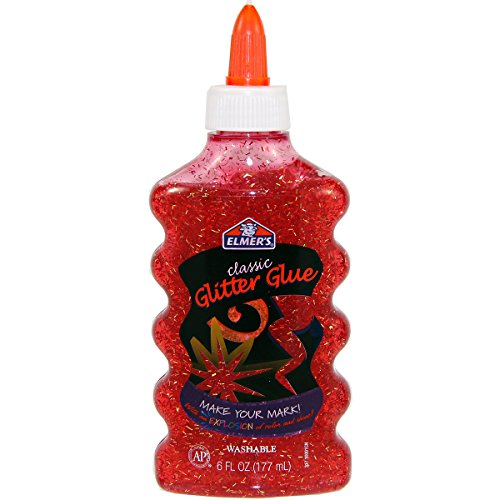
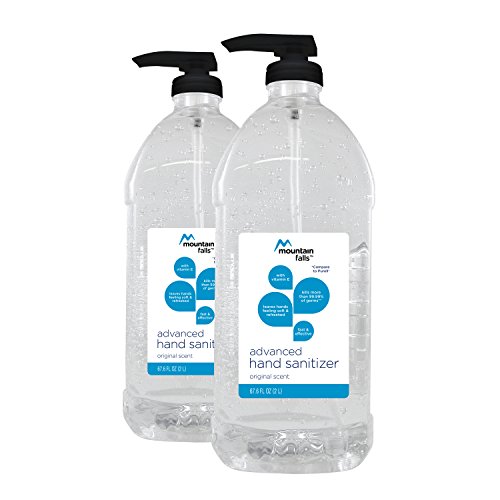
When it comes to making sensory bottles, the only limit is your imagination! You can use such a variety of materials. You need to start with an empty water bottle and filler (such as water, warm water mixed with clear glue or glitter glue, gel, hand sanitizer, sand, or rice).

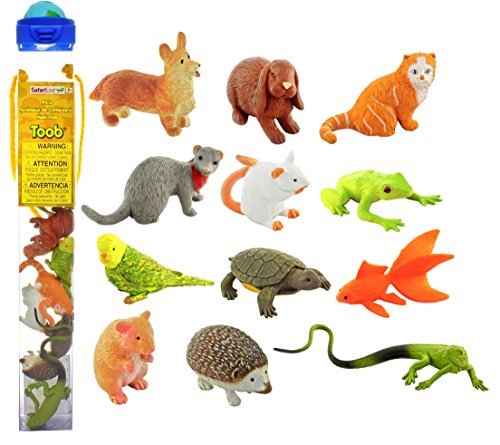
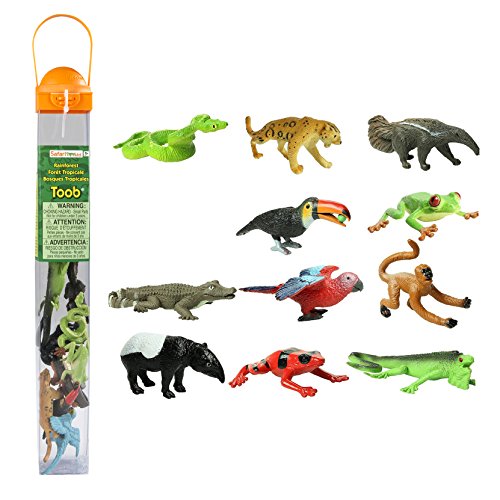
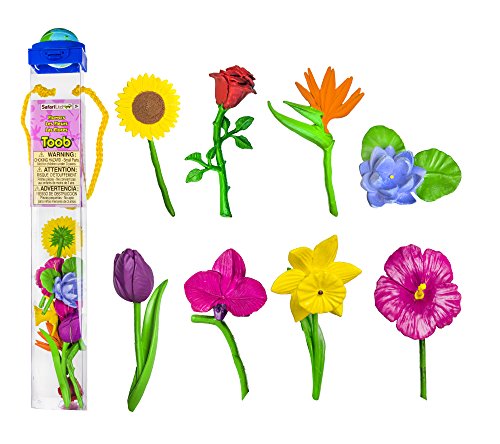
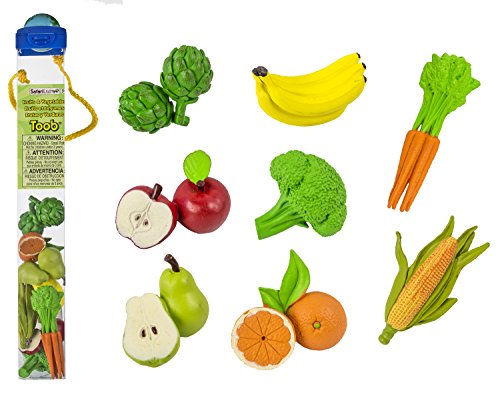
Next, can add whatever you want. Any type of confetti, small toys, objects found in nature, craft supplies, beads, erasers, or sequins work well. The figures in Toobs work well in most sensory bottles, though not all the figures are small enough to fit through the hole in the bottle top.

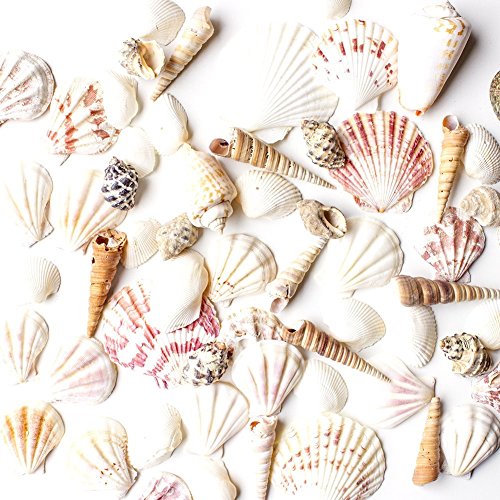
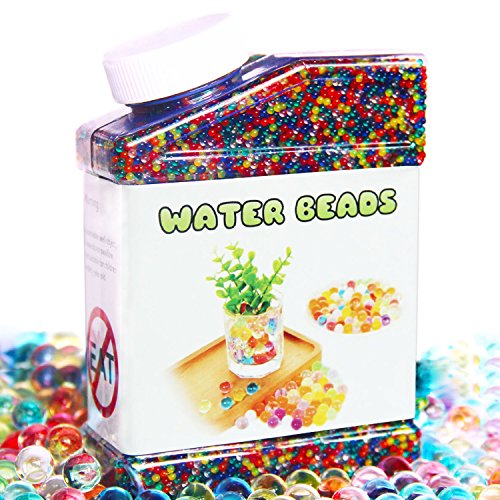
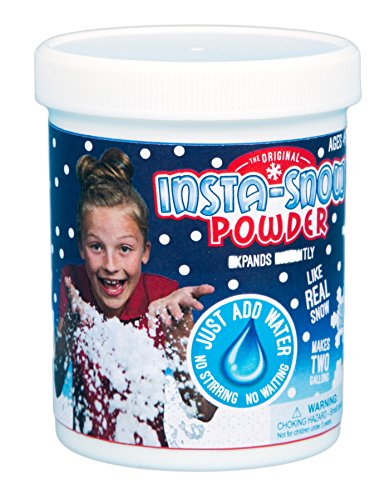
Voss Artesian Still Water 4x500ml Plastic BottlesVoss Artesian Still Water 4x500ml Plastic BottlesSafari Ltd Insects TOOBSafari Ltd Insects TOOBSafari Ltd Pets TOOBSafari Ltd Pets TOOBSafari Ltd Space TOOBSafari Ltd Space TOOBSafari Ltd Rainforest TOOBSafari Ltd Rainforest TOOBSafari Ltd Flowers TOOBSafari Ltd Flowers TOOBSafari Ltd Fruits & Vegetables ToobSafari Ltd Fruits & Vegetables ToobMini Construction ToysMini Construction ToysSea ShellsSea ShellsElmer's Liquid School Glue, ClearElmer’s Liquid School Glue, ClearElmer's Liquid Glitter GlueElmer’s Liquid Glitter GlueHand SanitizerHand SanitizerCreative Converting Swirls ConfettiCreative Converting Swirls ConfettiWater Beads Rainbow PackWater Beads Rainbow PackFishbowl BeadsFishbowl BeadsGlow In The Dark Pigment PowderGlow In The Dark Pigment PowderBe Amazing Insta-Snow JarBe Amazing Insta-Snow JarPerler BeadsPerler BeadsStar BeadsStar BeadsSequins and Spangles Shaker JarSequins and Spangles Shaker JarGlitter PowderGlitter PowderPompomsPompoms

Looking for sensory play ideas and answers to all your questions about sensory processing? Check out Sensory Processing Explained: A Handbook for Parents and Educators. 

Filed Under: Sensory Tagged With: sensory play

Helping Kids Understand Sensory Processing

By Sharla Kostelyk

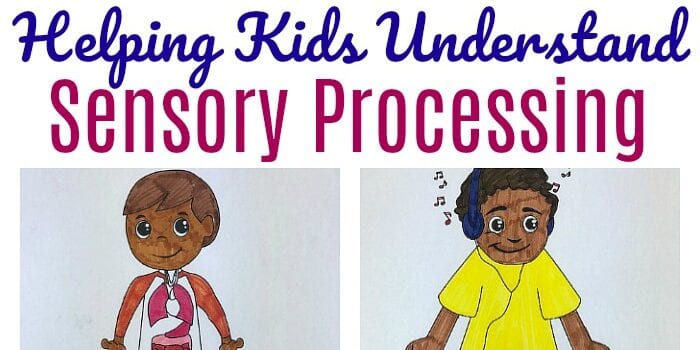
Proprioception, vestibular, interoception…sensory processing is complicated enough to explain to adults! So how can we go about explaining sensory processing to kids in a way that they will understand? Proprioception, vestibular, interoception...it's complicated! Teach kids about sensory processing in a way they will understand. #sensoryprocessingdisorder #sensoryprocessingexplained #sensory

A few weeks ago, I was driving with my son. I was a few days away from launching the book Sensory Processing Explained and he was asking me about the book. One of the things he said was “I understand why you wrote that book since so many of the other kids have Sensory Processing Disorder, but I don’t, do I?”. I couldn’t help but laugh.

Although we’ve not bothered to get this particular son an official diagnosis for Sensory Processing Disorder (SPD), I’m quite sure he has it. We already had the diagnosis for many of our other children, so I felt confident in my ability to meet his sensory needs without having it on paper.

His question made me realize that I had failed to explain to him why we did so many sensory activities and had so many sensory interventions. That day, I was finally able to explain that though he didn’t have some of the sensory seeking signs that some people automatically associate with SPD, he had other signs.

I began to tell him about the 8 sensory systems and as soon as I defined Interoception, he laughed out loud. “I guess I do have it!”, he proclaimed. You see, for him, sensory processing issues don’t look like constant spinning or movement. They don’t look like covering his ears when things are loud or complaining about itchy clothing fabrics.

For him, sensory issues present in more of his internal body awareness. He is always hot, even if it is -40° out in the middle of our Canadian winters. He feels hunger and thirst differently than most. His pain tolerance is incredibly high. In fact, his pain tolerance is so high that he hardly complained when his appendix almost ruptured!

He has a few other sensitivities too such as getting dizzy easily (vestibular), so he avoids spinning or amusement park rides that turn. But when it comes to the 5 senses that most people think of, he is quite typical.

It was more than a bit humbling to think that here I had literally written a book on Sensory Processing and yet, I had failed to properly explain it to one of my kids. I realized that I had assumed that they understood it well from all the sensory work that we do without being intentional about teaching it to them.

I have since rectified that. I have taught them the vocabulary, the basics, as well as teaching them to recognize and talk about their own sensory preferences.

Teaching kids about sensory processing is essential, especially for children with sensory issues. All kids need to develop the foundation and vocabulary to understand sensory processing, but it is even more crucial for children with sensory issues or Sensory Processing Disorder to have a solid grasp of the information.

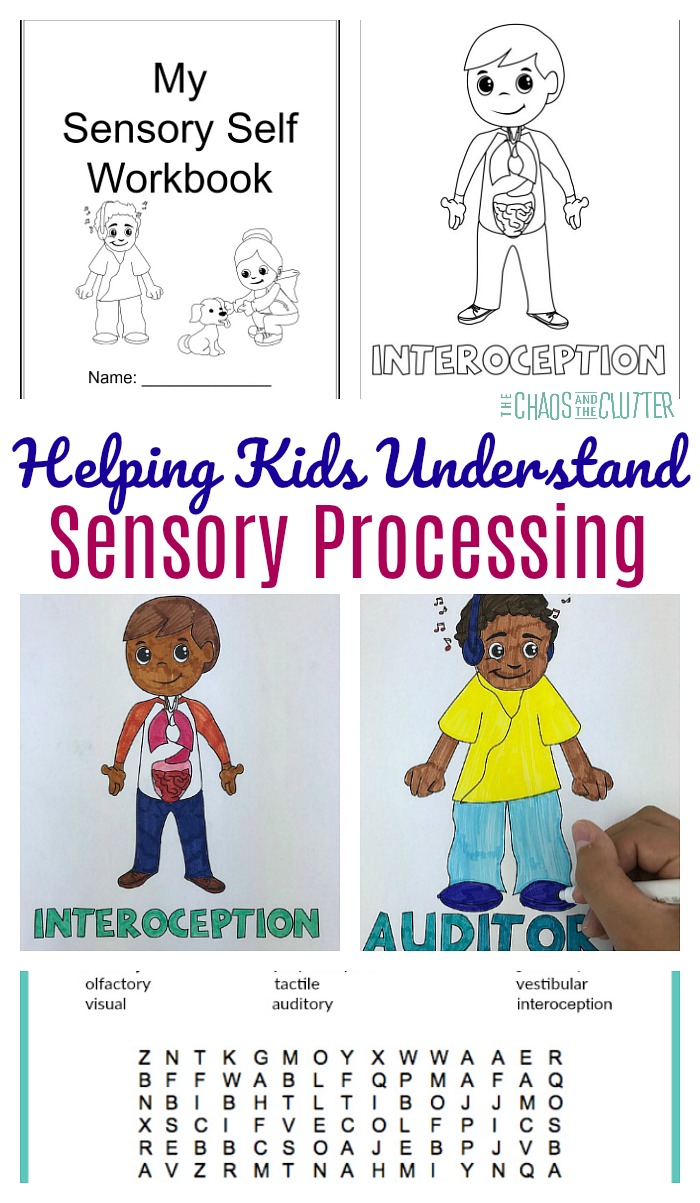
The My Sensory Self Workbook for Kids is a wonderful tool for teaching kids about sensory processing. It contains printable colouring pages, a kid-friendly explanation of each of the 8 sensory systems, a sensory word search, and a questionnaire designed to help kids identify their own unique sensory preferences. 

I created the ideas for the workbook while in the midst of explaining sensory processing to my kids. Their questions helped guide me. They have all really enjoyed filling out their workbooks. Even my older kids enjoyed learning this way and being able to personalize the sheets to their own sensory needs.

Explaining sensory processing to kids:

  • Keep it simple, but factual. Give them the proper vocabulary even at a young age.
  • Use visual cues and activities that they can participate in to secure their understanding. We designed the My Sensory Self Workbook just for kids. It was created to help them not only learn the 8 sensory systems, but to begin to recognize their own sensory preferences.
  • Talk about sensory processing in everyday conversation. For example, when asking at dinner if your child likes a particular food, point out that olfactory and gustatory senses may be at play.
  • If you are working with an occupational therapist (OT), consult with them about what you are teaching at home so that they can reinforce that in their sessions with your child.
  • Speak to your child’s teacher so that they know what you are teaching about sensory processing at home and can further cement it in school.
  • Once your child learns the vocabulary, help them to define their own sensory preferences. Giving them this language will be a powerful tool in helping them learn to advocate for themselves.

Other ideas for teaching kids about sensory processing:

  • Take them on a sensory walk. Explore and discover what you can find to represent each sensory system.
  • Have them make a collage out of pictures to go with each of the sensory systems.
  • Have your child keep a journal of different sensory likes and dislikes that they notice as they go about their day.
  • Do a Sensory Scavenger Hunt.

Talking openly about sensory processing and about Sensory Processing Disorder can help give voice to your child’s feelings. It also allows them to express any questions they may have about it.

Parents and teachers: You may find this free printable download of the signs of sensory overload helpful.

You may also be interested in reading:

Sensory Processing Disorder 

Sensory Processing Explained: A Handbook for Parents and Educators 

Outdoor Sensory Scavenger Hunt

Filed Under: Sensory, Special Needs Parenting

DIY Sensory Tools, Activities and Resources for Parents

By Sharla Kostelyk

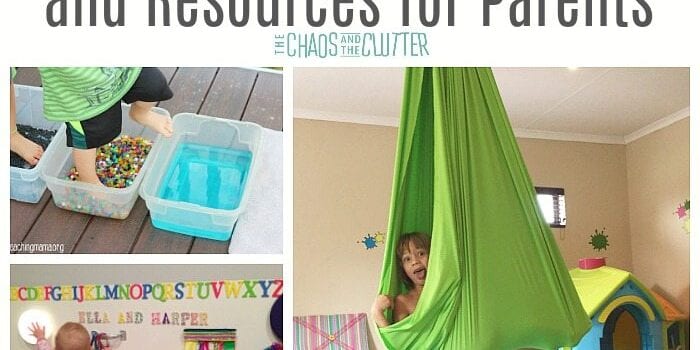
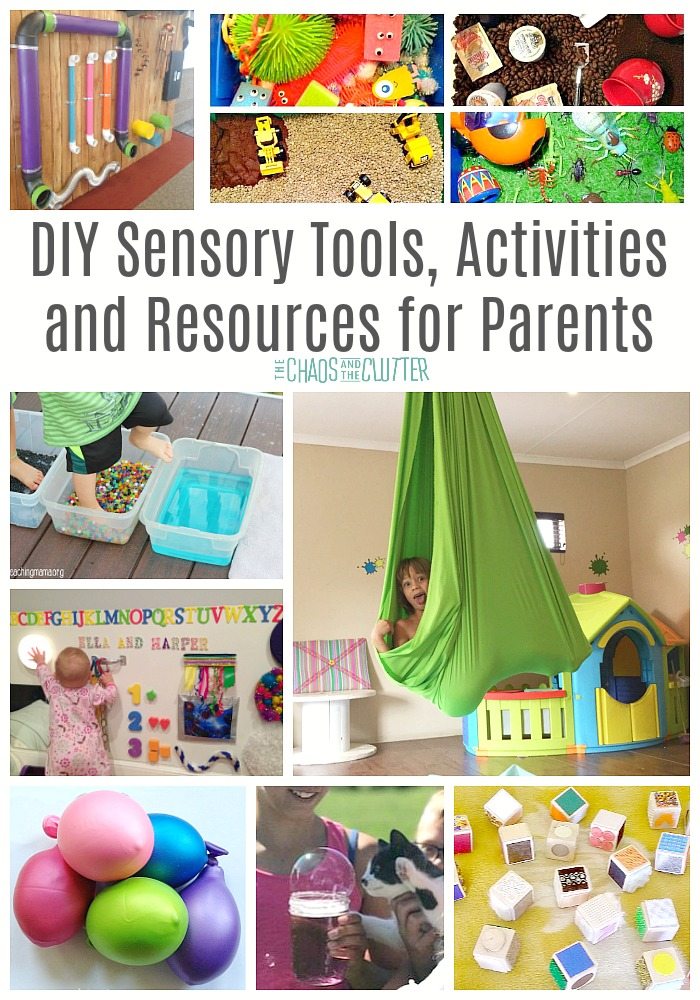
In our new book, Sensory Processing Explained, we dedicated an entire section to parents and providing tools and activity suggestions for the home. I wanted to share some of my favourite DIY sensory tools and activities that can be used at home. Sensory tools can be expensive. Making your own is a cost effective solution and often, the quality is even better.

DIY Sensory Tools, Activities and Resources for Parents #sensory #sensoryprocessingdisorder #sensoryprocessingexplained #spd

By putting together your own sensory tools and creating sensory activities at home, you will save money and be able to provide your child with the sensory input they need. Adult supervision should be used with all sensory activities.

DIY Sensory Solutions for Kids’ Rooms:

DIY Weighted Banket Tutorial – This is one of the best weighted blanket tutorials I’ve found. 

Homemade Stretchy Sensory Sheets – Some kids find that the weigh of a weighted blanket is too much but that a stretchy sheet provides just the right amount of resistance.

Make Your Own Tag Blanket Tutorial – For kids who need sensory feedback but not something weighted.

For Sensory Room or Sensory Space at Home:

DIY Sensory Room

Easy DIY Sensory Wall

DIY Indoor Sensory Swing

DIY No Sew Crash Mat

DIY Climbing Wall

Make your own Ball Pit using a plastic kiddie pool and pit balls or sliced up pool noodles.

DIY Sensory Board

DIY Sensory Music Wall

Quick and Easy Sensory Tent

Sensory Play:

Make Your Own Sensory Balls

Make Your Own Sensory Bottles

Make Your Own Sensory Bins

Make Your Own Sensory Bags

DIY Sensory Blocks

Rainbow Soap Foam

Tactile Sensory Cards

Make Your Own Lavender Scented Bubbles

DIY Scent Jars

Create your own weighted stuffed animal by cutting open an old stuffy and adding some nuts and bolts or weighted polly pellets. Add weight in the middle and in the feet of the stuffed animal and stitch it back up. Of course, the nuts and bolts could be a choking hazard for young children so use caution.

DIY Sensory Tools For the Backyard:

Ways to Make Your Own Simple “Water Table”

Make a Sensory Walk

Make Your Own Soap Foam Sidewalk Paint

Pool Noodle Water Wall

How to Make a PVC Pipe Sand and Water Table

DIY Sand Table

Make Your Own Calm Down Kit:

Calm Down Kit for Kids with Printable Relaxation Prompts

Christmas Calm Down Kit for Kids

Feel confident in explaining, understanding and managing sensory processing.

In Sensory Processing Explained: A Handbook for Parents and Educators, you’ll gain the tools you need to help your child or student navigate their senses. You will also find practical strategies and sensory activities that will benefit all children. 

Find DIY Sensory Tools and Activities for the Classroom on Growing Hands-on Kids.

Learn more about Sensory Processing Disorder. 

Filed Under: Sensory

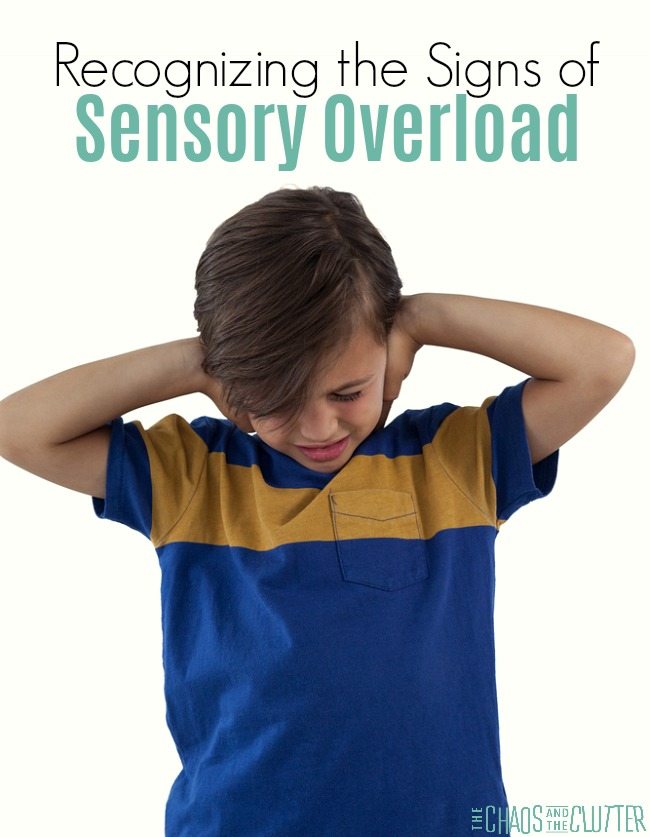
Recognizing the Signs of Sensory Overload in Children

By Sharla Kostelyk

Sensory input is coming at us constantly. Whether we are in a quiet room by ourselves or at a busy birthday party, sensory experiences are shaping how we perceive the world around us. Sensory overload can happen to all of us, but for children with sensory processing issues, it can be overwhelming. They may not have the tools and coping skills to handle all the sensory information their bodies are processing. Recognizing the signs of sensory overload in children #sensoryprocessing #sensory #SPD #sensoryprocessingdisorder #specialneeds


What is sensory overload?

Sensory overload occurs when the body is unable to process, organize, and respond to all the incoming sensory input. Although this can happen to anyone, it is more common in those who have Sensory Processing Disorder (SPD) or sensory issues.

Technology and our fast paced society has led to us being bombarded with more and more sensory stimuli. It is no wonder that our brains and nervous systems are sometimes overloaded.

Picture this:

It’s public swim time at the local indoor pool. There are the sounds of kids screaming, babies crying, parents calling out to get their child’s attention, music coming over the speakers, the whir of the pumps, the constant flow of the waterslide, the drip of the waterfall, and splashing water.

You see bright overhead lights, a row of red and yellow life jackets hanging on the wall, people everywhere, pool toys and flotation devices covering the surface of the water, diving boards, a swinging rope, spinning ceiling fans, and there’s even a woman practising kickboxing on a yoga mat on the pool deck.

There is the feel of the pressure of water around you, water suddenly being splashed into your face as someone kicks nearby, the warmth of the hot tub and sauna contrasted with the cold of the salt water children’s wading pool.

You pick up on a mixture of smells as the chlorine of the adult pool and the salt water of the children’s pool mix with everyone’s shampoos and body washes and perfumes. There’s the taste of salt or chlorine as you come up sputtering. There’s the feeling of the movement through the water or the burn of the waterslide on your back and the feel of the air on your face as you quickly soar through the air off the high diving board before plunging into the water below.

This doesn’t even take into consideration the crowded change rooms or lobby. It’s easy to see how anyone could experience sensory overload on a trip to the swimming pool!
Why is it important to recognize the signs of sensory overload?

By catching the signs of sensory overload early, you can help your child to self-regulate and possibly prevent a sensory meltdown or having your child go into fight, flight, or freeze mode. Sensory overload is not the same as a sensory meltdown, but it can be the precursor to one.

When children have sensory processing challenges, it makes them more susceptible to sensory overload. They may not be able to recognize the signs themselves until they are slowly taught to do so. This is why it is important for their parents or teachers to be on the lookout for clues that indicate that sensory overload is happening.

It is also important to talk about those signs with the child to help them recognize them in themselves. This is something that is usually best done later when the child is calm and no longer showing signs of sensory overload.

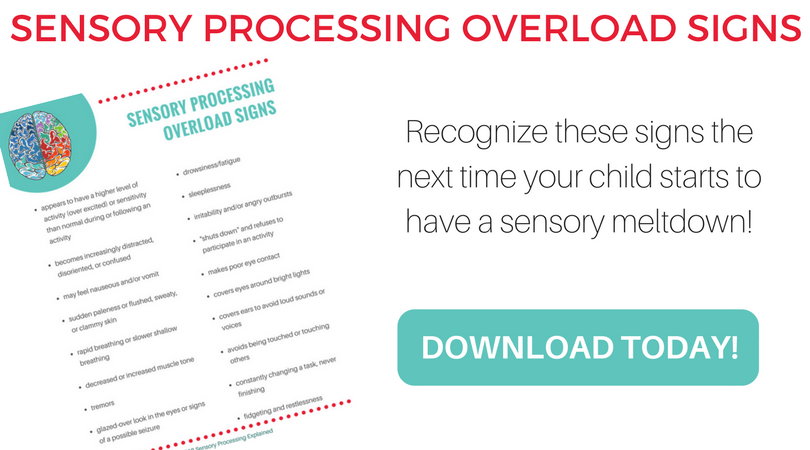
What are the signs of sensory processing overload in children?

  • appears to have a higher level of activity (over excited) or sensitivity than normal during or following an activity
  • becomes increasingly distracted, disoriented, or confused
  • may feel nauseous and/or vomit
  • sudden paleness or flushed, sweaty, or clammy skin
  • rapid breathing or slower shallow breathing
  • decreased or increased muscle tone
  • tremors
  • glazed-over look in the eyes or signs of a possible seizure
  • drowsiness/fatigue
  • sleeplessness
  • irritability and/or angry outbursts
  • “shuts down” and refuses to participate in an activity
  • makes poor eye contact
  • covers eyes around bright lights
  • covers ears to avoid loud sounds or voices
  • avoids being touched or touching others
  • constantly changing a task, never finishing
  • fidgeting and restlessness

Get your own copy of Sensory Processing Overload Signs to print off and keep as a reminder here. 

Preventing sensory overload:

  • Monitor the environment. Be on the lookout for things that may be giving too much sensory input.
  • Reduce the visual and auditory clutter in your home, especially in rooms the child spends the most time.
  • Avoid places and situations that will have too much stimulus.
  • When those situations can’t be avoided, provide tools such as noise reducing headphones to reduce sensory input.
  • Work with a qualified Occupational Therapist (OT).
  • Offer regular sensory breaks throughout the day.
  • Take extra time and give warnings to help the child prepare for any transition times.
  • Maintain a predictable schedule and routine.
  • Use calming strategies and breathing techniques.

My friend Heather at Growing Hands-On Kids has written a great article detailing sensory overload in the classroom. It’s a wonderful tool to help teachers and parents.

CLICK HERE to read Sensory Processing Overload Signs in the Classroom

Don’t forget to grab your list of sensory processing overload signs! 


You may also want to read:

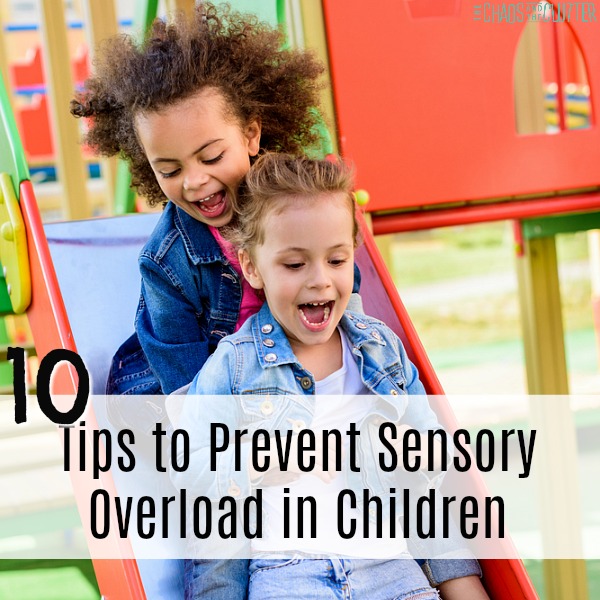
10 Tips to Prevent Sensory Overload in Children

How to Stop Sensory Overload from Turning into a Sensory Meltdown

Sensory Meltdowns

Calm Down Activities for Kids 

Filed Under: Sensory, Special Needs Parenting

  • « Go to Previous Page
  • Page 1
  • Interim pages omitted …
  • Page 23
  • Page 24
  • Page 25
  • Page 26
  • Page 27
  • Interim pages omitted …
  • Page 50
  • Go to Next Page »

Primary Sidebar

Categories

We are a participant in the Amazon Services LLC Associates Program, an affiliate advertising program designed to provide a means for us to earn fees by linking to Amazon.com and affiliated sites.

Copyright © 2026 • The Chaos and the Clutter • Site Design by Jeni @ The Blog Maven

Return to top of page

Copyright © 2026 · Chaos and the Clutter 2.0 on Genesis Framework · WordPress · Log in