• Skip to primary navigation
  • Skip to main content
  • Skip to primary sidebar
  • Home
  • About
  • Contact
  • Privacy + Terms
  • Affiliates

The Chaos and the Clutter

  • Facebook
  • Twitter
  • Pinterest
  • Google Plus
  • RSS
  • Email
  • School at Home
  • Sensory
    • Sensory Processing Disorder
    • Awesome Sensory Play Activities
      • Sensory Bins
      • Sensory Bottles
      • Sensory Bags
  • Family Games
    • Minute to Win It Games
  • Special Needs Parenting
    • Childhood Anxiety
    • Reactive Attachment Disorder
    • Sensory Processing Disorder
  • Store
  • Course Login

Special Needs Parenting

What We Can Learn About Grieving from the Mother Whale

By Sharla Kostelyk

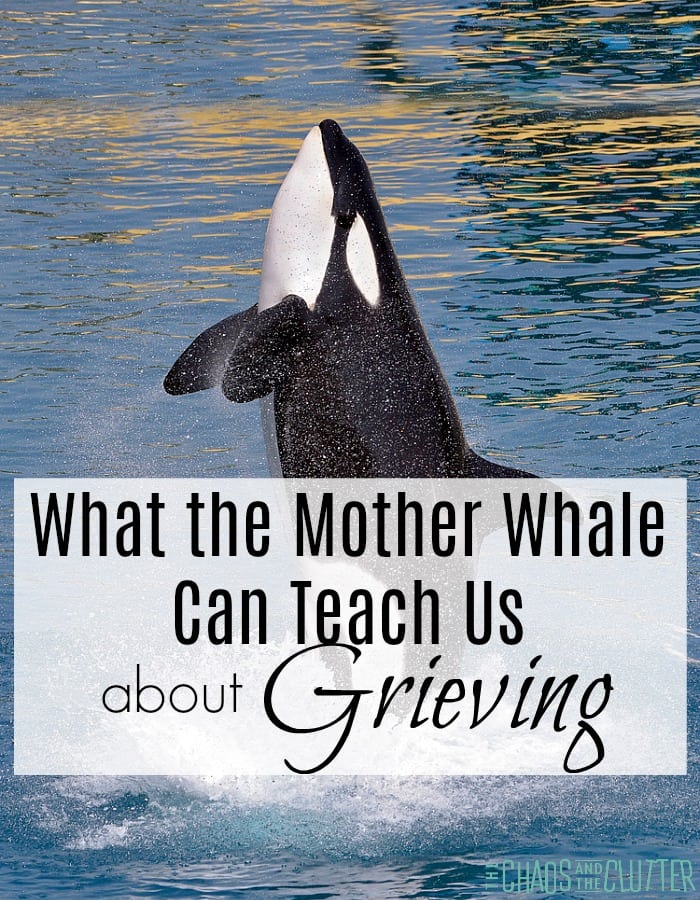
Were you captivated by the story of the mother whale who carried her dead calf for 17 days before finally letting go? I was moved. As a mother, I can only imagine what it is like to lose a child. But I know other types of grief and I could relate to some of what she must be going through.

I know it may sound a bit ridiculous to shed tears over an orca’s love for her baby, but once you’re a parent, you understand a depth of love that is indescribable. What the Mother Whale can teach us about Grieving #griefandloss #parenting #grieving
While the world followed her story, there were those who were concerned that the mother wasn’t eating enough. There were those who speculated that perhaps she had a certain spot in mind to leave her calf. I pondered something different.

Just as we carry our own children through the hard times in their lives (especially true for those of us parenting children with special needs), this mother carries her baby on her back for seventeen days through the ocean.

There is much that we could learn about grieving from this majestic animal. In North America, we tend to grieve in private. We put time restrictions on grief. We worry if we perceive that a person is grieving for “too long”.

The fact that there was so much concern and speculation about a whale’s period of grieving provides evidence of just how uncomfortable we are talking openly about grief and loss.

This mother whale didn’t care that other killer whales usually carry their dead calves for a shorter period of time. She wasn’t concerned with appearances or a timetable put in place by others.

She allowed herself to process the death of her baby and mourn in the way that came naturally to her.

Orcas are known to have strong familial connections. Tahlequah (the name given to this whale) had relatives who occasionally took turns carrying the body of her calf for her during her journey. They did not rush her to let her baby go. They helped her carry the load. Literally.

The pod watched her closely and understood her need to mourn her loss. They helped in feeding her and giving her breaks from carrying the weight of her calf.

She carried her calf’s body for 1,000 miles, sacrificing as only a parent can to be able to say goodbye in the way she wanted to.

Now that her time of mourning is over, she is frolicking with other whales and eating normally. She is able to do this because she allowed herself to grieve in the way she needed to for as long as she needed to.

What we can learn about grieving from this mother whale:

  • grief is different for everyone
  • showing our grief outwardly allows others in
  • the only timeline to worry about is your own
  • grieve in the way you need to
  • keep the person’s memory alive in ways that are meaningful to you
  • don’t worry about how your grief is being perceived or judged
  • don’t grieve alone
  • be there for those who are grieving
  • don’t rush their mourning
  • help carry their load
  • feed them and give them breaks
  • love on them until they are able to swim on their own

In our society, we often try to wrap grief up in a pretty bow. We expect that between the death and the funeral, there will be deep mourning. Yet somehow, we think that after the funeral, life moves on.

The reality is that the time between the loss and the funeral is usually gone through in shock. Add to that the busyness of planning and decision making and often, the reality doesn’t set in until well after the funeral is over and others have gone home. It is then that those grieving need their “pod” the most.

Talking to kids about grief:

  • use age appropriate language, but do not shield them from the truth
  • share your own grief with them so that they see that it is okay to share feelings and even to cry
  • tell them that each person grieves differently
  • give them an emotions vocabulary and the ability to express their feelings
  • take seriously their grief over the loss of a pet or friend who moves away or a parent’s divorce
  • teach them the stages of grief and how they don’t necessarily happen in a particular order
  • let them express their feelings through play and art
  • allow them to be a part of commemorative rituals such as the funeral or memorial service
  • give them opportunities to share their favourite memories of the loved one
  • get professional help for them if you see that they are not coping in healthy ways

When my father-in-law passed away over a year ago, we involved our kids and allowed them to grieve. As soon as he received his terminal cancer diagnosis, we told the kids. We also told them that we wouldn’t be keeping secrets from them. We expressed that any of their questions would be answered honestly.

As his condition worsened, we involved them in the process, allowing them to begin saying good-bye. We brought them to the Hospice, explaining ahead of time what they would see and what they could expect. They each got to say goodbye in their own way.

The morning that he passed away, we came home and told the kids immediately. Some of them cried. Others ate their pancakes. Others wanted some time alone. One hardly left my side for days. Each of them processed it in their own way.

Before his memorial service, some of the kids wrote letters or drew pictures. They placed these in the casket with him. They were also able to write or draw things directly on the casket if they chose to. We hid nothing from them.

One of our sons had a hard time going back to school afterwards, so we kept him home until he felt ready. At times, he would go for a half day and then call me to pick him up. His grieving took longer than some of his siblings because it triggered some prior losses he had had in his life.

It’s so important to know and convey that it is okay for everyone to grieve in the way that they need to. There is no right or wrong length of time for grieving.

You may also be interested in reading:

Helping a Child Through TraumaHelping a Child Through Trauma
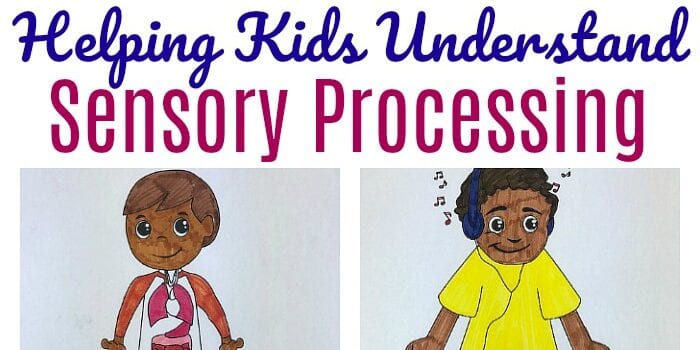
Symptoms of Anxiety in Children

Teaching Emotions Toolkit

Filed Under: Special Needs Parenting

Is There Hope for Reactive Attachment Disorder?

deep levels of healing Karyn Purvis quote

By Sharla Kostelyk

Parenting a child with RAD (Reactive Attachment Disorder) is not for the faint of heart. It can be a discouraging, uphill battle. One of the questions I hear from parents most often is: Is there hope for a child with RAD? As the mom of two children who are diagnosed with Reactive Attachment Disorder, it’s a question I have asked myself often over the years as well. Is there hope for children with Reactive Attachment Disorder? #adoption #parenting #RAD #reactiveattachmentdisorder

Living with the effects of RAD in your home can wear on the whole family over time, especially if you don’t feel like there is light at the end of the tunnel.

For many years, I heard therapists and experts and other parents parenting kids with RAD tell me that there was no hope. It felt like we had tried everything and things were only getting worse. I felt hopelessness and despair.

It wasn’t until my husband and I attended an Empowered to Connect conference in Minneapolis and heard Dr. Karyn Purvis speak that I had my first glimmer of hope.

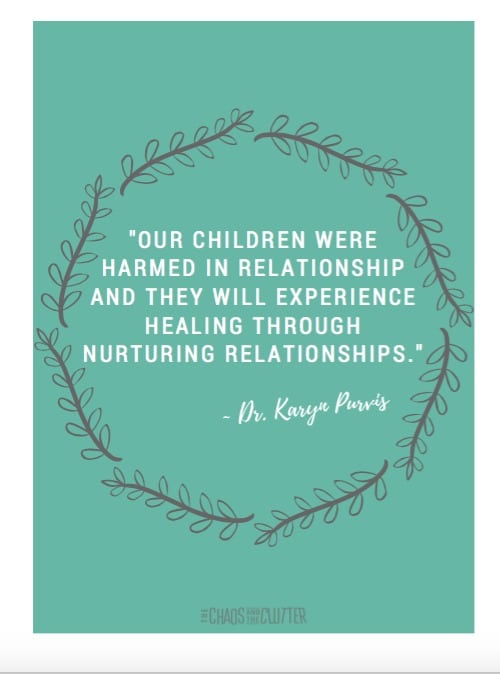
“I’ve never met a child who can’t come to deep levels of healing.” ~ Dr. Karyn Purvis deep levels of healing Karyn Purvis quote

Listening to story after story of children who had been able to come to a place of healing gave me something to cling to. I felt like I had hope for our children’s futures, for our family, for the first time in a long time.

I wish that I could say that after we came home from that conference and put into practise what we had learned, all the negative behaviours magically disappeared and our children quickly learned that they could trust us. They didn’t. I wish I could say that the road got easier. It didn’t.

The road was twisty and long. We were exhausted. We went through harder times than we had before. We asked for help. We accessed services and therapies. We nearly got to the end of our capabilities and our sanity.

For the privacy of our children, I am not sharing specifics of just how difficult things got. But I know that if you are parenting a child who has been diagnosed with Reactive Attachment Disorder, I do not need to share specifics. You know. You live this. I hope that it helps you just even a little bit to know that others have lived it too and have survived.

There is hope.

Our son and our daughter are showing healthy and secure attachment. They turn to us when they are sick or hurting and need comfort. They trust that we will meet their needs.

They make eye contact. They talk about their feelings. They hug us. They ask for what they need instead of “asking” through behaviours. They are able to accept correction and follow our rules (most of the time).

They are choosing me. Our daughter no longer wants to go with strangers or “shop for a new mommy”.

They show empathy and compassion for others. They are gaining confidence in who they are. They are accepting our love and are reciprocating it.

It feels like a miracle.

Their journeys have been different. Our son’s attachment to us came sooner, but his trauma still affects many aspects of his life. Our son has loved us fiercely for a number of years now, but our daughter was not able to allow herself to accept our love or love us in return.

And then, eight and a half years after she came to us, we began to see signs. They were small at first. Sometimes she would grow closer to us and then catch herself and push us away. Tuck-ins became longer as she began to open up to us and share her feelings. She began to sit next to me on the couch.

She was making eye contact and asking for my help with things. She was singing more and dancing with me in the kitchen.

I felt like I was holding my breath at times, afraid that in a puff, the magic would disappear and the angry girl would return. But the content girl stayed.

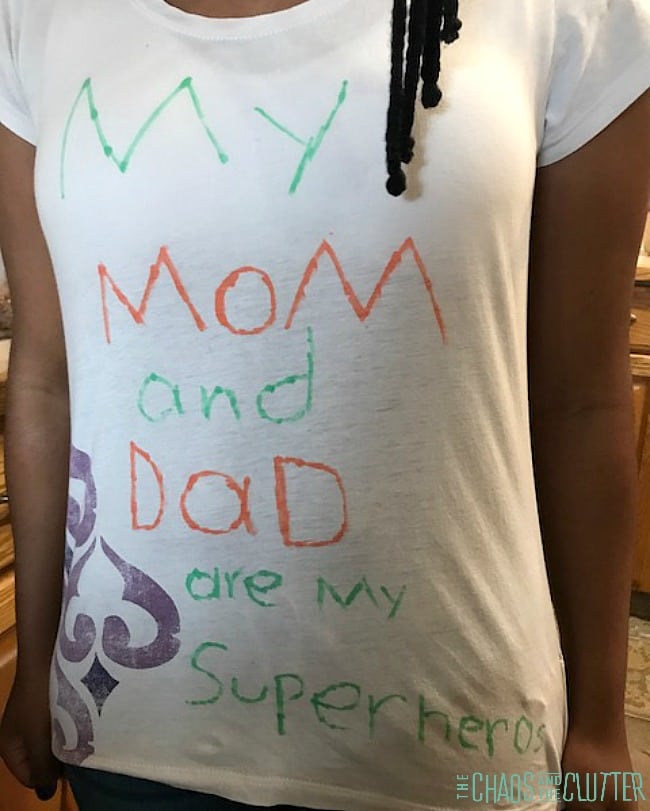
One morning, I noticed as our daughter was about to go to school that she had written something on her shirt in permanent marker. (There was a time when such a thing would have upset me, but one of the many things I have learned on this connective parenting journey is what is really a mountain and what isn’t. I’m not bothered by permanent marker on an old t-shirt now.)

I asked her what she had written on her shirt and she told me that today was Superhero Day at her school and since she didn’t have a superhero costume, she had decided to make hers.

She pulled her coat open to reveal what she had written on her shirt. 

In case you can’t read that, it says, “My Mom and my Dad are my Superheros”!!!

I don’t have adequate words to describe the significance of that. There were so many years where she pushed me away, where she couldn’t accept my love, where she felt that she was betraying her first mom if she even smiled in my direction, where she expressed the depth of her hatred for me with nearly every breath.

I had tears in my eyes as I reflected on how far we had come. I also had tears in my eyes later that week when she wanted to hold my hand everywhere we went and tears in my eyes when I overheard her tell someone “I’m so lucky that I can love two mommies and two daddies”.

And the tears were streaming all the way down my face two weeks ago when she got baptized and shared her story in front of a building full of people, a story of loss and hurt, of sorrow and pain, of losing her first family and her first country and then of losing her hearing, but also a story of redemption and love.

Once she was able to accept our love for her, she was able to accept God’s love for her as well. That day felt like the culmination of our journey. It doesn’t mean that our journey is over, but having a symbol of how far we have all come was pretty special.

Our kids still have early childhood trauma that they are working through. Behaviours still rear their ugly heads sometimes when our kids forget to use their words or forget to talk about their feelings. But there are more good days than bad and there is a lot more joy in our home.

Things aren’t perfect. I don’t expect them to ever be. There is no “magic” cure for RAD, but there is hope. 
Join me for a free 5 part email series, Little Hearts, Big Worries offering resources and hope for parents.

You may also want to read:

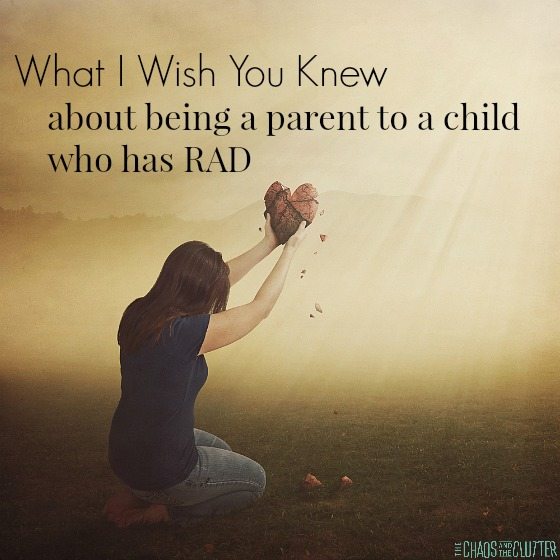
What I Wish You Knew About Parenting a Child with RAD What I Wish You Knew About being a parent to a child who has RAD (Reactive Attachment Disorder)

Reactive Attachment Disorder Books 

Filed Under: Adoption, Special Needs Parenting

Helping Kids Understand Sensory Processing

By Sharla Kostelyk

Proprioception, vestibular, interoception…sensory processing is complicated enough to explain to adults! So how can we go about explaining sensory processing to kids in a way that they will understand? Proprioception, vestibular, interoception...it's complicated! Teach kids about sensory processing in a way they will understand. #sensoryprocessingdisorder #sensoryprocessingexplained #sensory

A few weeks ago, I was driving with my son. I was a few days away from launching the book Sensory Processing Explained and he was asking me about the book. One of the things he said was “I understand why you wrote that book since so many of the other kids have Sensory Processing Disorder, but I don’t, do I?”. I couldn’t help but laugh.

Although we’ve not bothered to get this particular son an official diagnosis for Sensory Processing Disorder (SPD), I’m quite sure he has it. We already had the diagnosis for many of our other children, so I felt confident in my ability to meet his sensory needs without having it on paper.

His question made me realize that I had failed to explain to him why we did so many sensory activities and had so many sensory interventions. That day, I was finally able to explain that though he didn’t have some of the sensory seeking signs that some people automatically associate with SPD, he had other signs.

I began to tell him about the 8 sensory systems and as soon as I defined Interoception, he laughed out loud. “I guess I do have it!”, he proclaimed. You see, for him, sensory processing issues don’t look like constant spinning or movement. They don’t look like covering his ears when things are loud or complaining about itchy clothing fabrics.

For him, sensory issues present in more of his internal body awareness. He is always hot, even if it is -40° out in the middle of our Canadian winters. He feels hunger and thirst differently than most. His pain tolerance is incredibly high. In fact, his pain tolerance is so high that he hardly complained when his appendix almost ruptured!

He has a few other sensitivities too such as getting dizzy easily (vestibular), so he avoids spinning or amusement park rides that turn. But when it comes to the 5 senses that most people think of, he is quite typical.

It was more than a bit humbling to think that here I had literally written a book on Sensory Processing and yet, I had failed to properly explain it to one of my kids. I realized that I had assumed that they understood it well from all the sensory work that we do without being intentional about teaching it to them.

I have since rectified that. I have taught them the vocabulary, the basics, as well as teaching them to recognize and talk about their own sensory preferences.

Teaching kids about sensory processing is essential, especially for children with sensory issues. All kids need to develop the foundation and vocabulary to understand sensory processing, but it is even more crucial for children with sensory issues or Sensory Processing Disorder to have a solid grasp of the information.

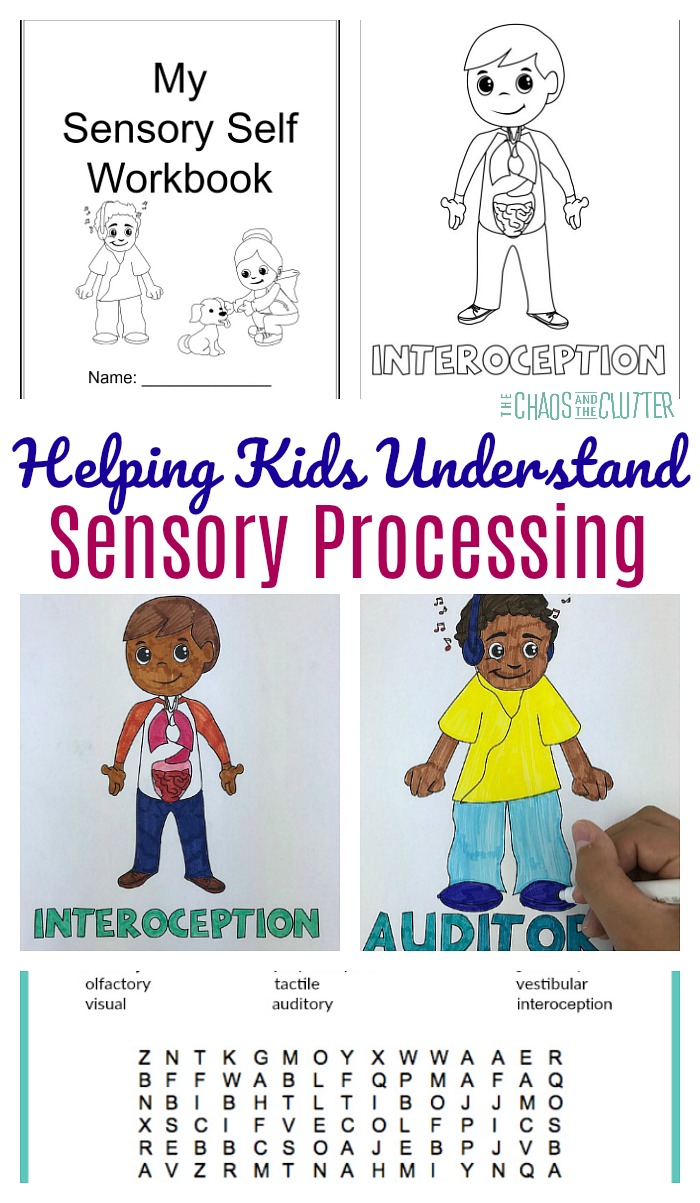
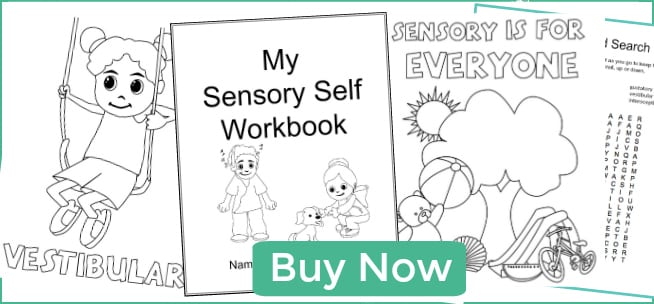
The My Sensory Self Workbook for Kids is a wonderful tool for teaching kids about sensory processing. It contains printable colouring pages, a kid-friendly explanation of each of the 8 sensory systems, a sensory word search, and a questionnaire designed to help kids identify their own unique sensory preferences. 

I created the ideas for the workbook while in the midst of explaining sensory processing to my kids. Their questions helped guide me. They have all really enjoyed filling out their workbooks. Even my older kids enjoyed learning this way and being able to personalize the sheets to their own sensory needs.

Explaining sensory processing to kids:

  • Keep it simple, but factual. Give them the proper vocabulary even at a young age.
  • Use visual cues and activities that they can participate in to secure their understanding. We designed the My Sensory Self Workbook just for kids. It was created to help them not only learn the 8 sensory systems, but to begin to recognize their own sensory preferences.
  • Talk about sensory processing in everyday conversation. For example, when asking at dinner if your child likes a particular food, point out that olfactory and gustatory senses may be at play.
  • If you are working with an occupational therapist (OT), consult with them about what you are teaching at home so that they can reinforce that in their sessions with your child.
  • Speak to your child’s teacher so that they know what you are teaching about sensory processing at home and can further cement it in school.
  • Once your child learns the vocabulary, help them to define their own sensory preferences. Giving them this language will be a powerful tool in helping them learn to advocate for themselves.

Other ideas for teaching kids about sensory processing:

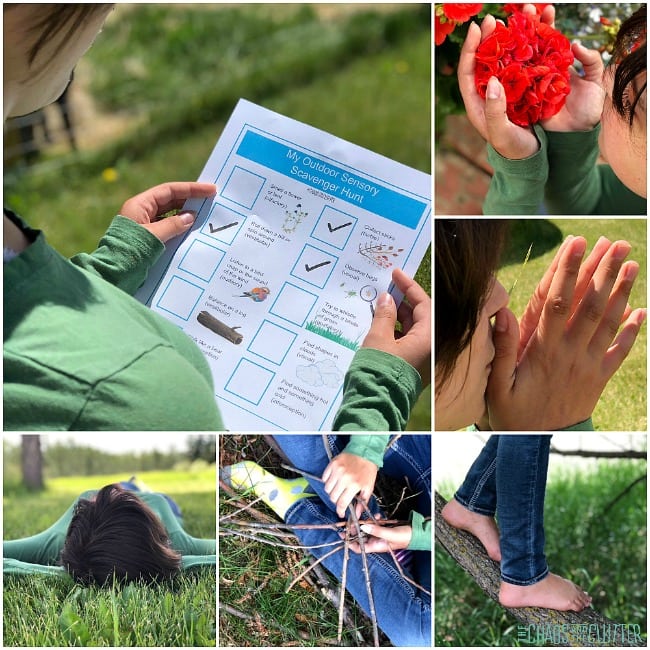
  • Take them on a sensory walk. Explore and discover what you can find to represent each sensory system.
  • Have them make a collage out of pictures to go with each of the sensory systems.
  • Have your child keep a journal of different sensory likes and dislikes that they notice as they go about their day.
  • Do a Sensory Scavenger Hunt.

Talking openly about sensory processing and about Sensory Processing Disorder can help give voice to your child’s feelings. It also allows them to express any questions they may have about it.

Parents and teachers: You may find this free printable download of the signs of sensory overload helpful.

You may also be interested in reading:

Sensory Processing Disorder 

Sensory Processing Explained: A Handbook for Parents and Educators 

Outdoor Sensory Scavenger Hunt

Filed Under: Sensory, Special Needs Parenting

Recognizing the Signs of Sensory Overload in Children

By Sharla Kostelyk

Sensory input is coming at us constantly. Whether we are in a quiet room by ourselves or at a busy birthday party, sensory experiences are shaping how we perceive the world around us. Sensory overload can happen to all of us, but for children with sensory processing issues, it can be overwhelming. They may not have the tools and coping skills to handle all the sensory information their bodies are processing. Recognizing the signs of sensory overload in children #sensoryprocessing #sensory #SPD #sensoryprocessingdisorder #specialneeds


What is sensory overload?

Sensory overload occurs when the body is unable to process, organize, and respond to all the incoming sensory input. Although this can happen to anyone, it is more common in those who have Sensory Processing Disorder (SPD) or sensory issues.

Technology and our fast paced society has led to us being bombarded with more and more sensory stimuli. It is no wonder that our brains and nervous systems are sometimes overloaded.

Picture this:

It’s public swim time at the local indoor pool. There are the sounds of kids screaming, babies crying, parents calling out to get their child’s attention, music coming over the speakers, the whir of the pumps, the constant flow of the waterslide, the drip of the waterfall, and splashing water.

You see bright overhead lights, a row of red and yellow life jackets hanging on the wall, people everywhere, pool toys and flotation devices covering the surface of the water, diving boards, a swinging rope, spinning ceiling fans, and there’s even a woman practising kickboxing on a yoga mat on the pool deck.

There is the feel of the pressure of water around you, water suddenly being splashed into your face as someone kicks nearby, the warmth of the hot tub and sauna contrasted with the cold of the salt water children’s wading pool.

You pick up on a mixture of smells as the chlorine of the adult pool and the salt water of the children’s pool mix with everyone’s shampoos and body washes and perfumes. There’s the taste of salt or chlorine as you come up sputtering. There’s the feeling of the movement through the water or the burn of the waterslide on your back and the feel of the air on your face as you quickly soar through the air off the high diving board before plunging into the water below.

This doesn’t even take into consideration the crowded change rooms or lobby. It’s easy to see how anyone could experience sensory overload on a trip to the swimming pool!

Why is it important to recognize the signs of sensory overload?

By catching the signs of sensory overload early, you can help your child to self-regulate and possibly prevent a sensory meltdown or having your child go into fight, flight, or freeze mode. Sensory overload is not the same as a sensory meltdown, but it can be the precursor to one.

When children have sensory processing challenges, it makes them more susceptible to sensory overload. They may not be able to recognize the signs themselves until they are slowly taught to do so. This is why it is important for their parents or teachers to be on the lookout for clues that indicate that sensory overload is happening.

It is also important to talk about those signs with the child to help them recognize them in themselves. This is something that is usually best done later when the child is calm and no longer showing signs of sensory overload.

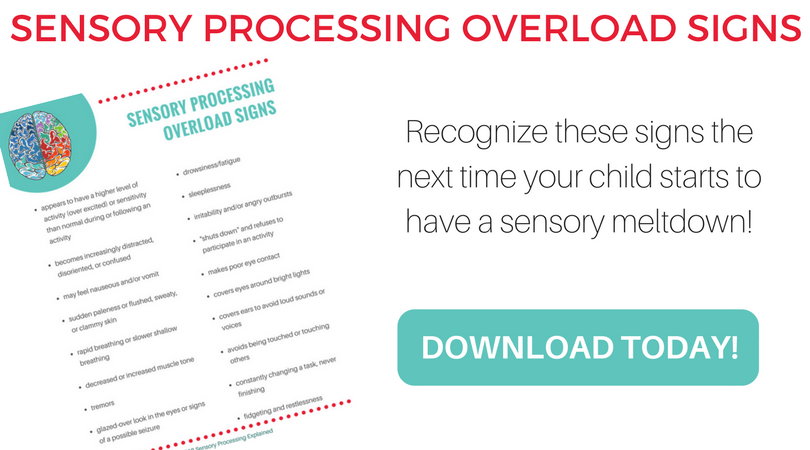
What are the signs of sensory processing overload in children?

  • appears to have a higher level of activity (over excited) or sensitivity than normal during or following an activity
  • becomes increasingly distracted, disoriented, or confused
  • may feel nauseous and/or vomit
  • sudden paleness or flushed, sweaty, or clammy skin
  • rapid breathing or slower shallow breathing
  • decreased or increased muscle tone
  • tremors
  • glazed-over look in the eyes or signs of a possible seizure
  • drowsiness/fatigue
  • sleeplessness
  • irritability and/or angry outbursts
  • “shuts down” and refuses to participate in an activity
  • makes poor eye contact
  • covers eyes around bright lights
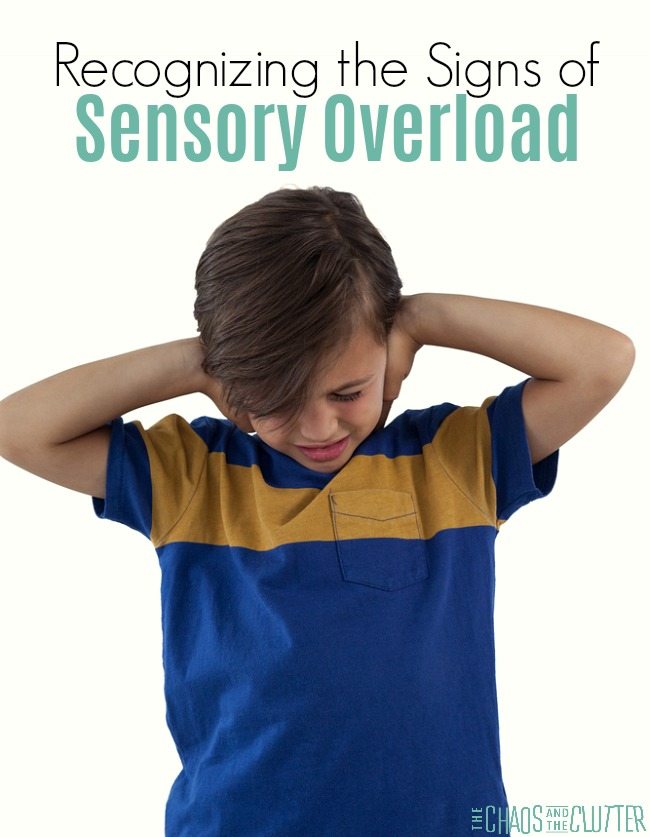
  • covers ears to avoid loud sounds or voices
  • avoids being touched or touching others
  • constantly changing a task, never finishing
  • fidgeting and restlessness

Get your own copy of Sensory Processing Overload Signs to print off and keep as a reminder here. 

Preventing sensory overload:

  • Monitor the environment. Be on the lookout for things that may be giving too much sensory input.
  • Reduce the visual and auditory clutter in your home, especially in rooms the child spends the most time.
  • Avoid places and situations that will have too much stimulus.
  • When those situations can’t be avoided, provide tools such as noise reducing headphones to reduce sensory input.
  • Work with a qualified Occupational Therapist (OT).
  • Offer regular sensory breaks throughout the day.
  • Take extra time and give warnings to help the child prepare for any transition times.
  • Maintain a predictable schedule and routine.
  • Use calming strategies and breathing techniques.

My friend Heather at Growing Hands-On Kids has written a great article detailing sensory overload in the classroom. It’s a wonderful tool to help teachers and parents.

CLICK HERE to read Sensory Processing Overload Signs in the Classroom

Don’t forget to grab your list of sensory processing overload signs! 


You may also want to read:

10 Tips to Prevent Sensory Overload in Children

How to Stop Sensory Overload from Turning into a Sensory Meltdown

Sensory Meltdowns

Calm Down Activities for Kids 

Filed Under: Sensory, Special Needs Parenting

An After School Meltdown Strategy that Actually Works

By Sharla Kostelyk

Within days of school starting last Fall, I saw a pattern emerging. Each day in the first half hour after arriving home from school (often in the first few minutes even), our daughter would have an outburst or emotional breakdown. I was beginning to dread the arrival of the school bus. It was perplexing because she loved going to school. She was making friends. She liked her teacher and her aide. That made these after school meltdowns confusing.

An After School Meltdown Strategy that really works #parenting #parentingtips #parentingspecialneedsI played detective. I talked to the school. They confirmed that she was adjusting well there. I listened to her feelings. I tracked any other possible triggers for these behaviours. I was able to come to the conclusion that she was having a hard time transitioning between school and home.

She needed help making that transition. She needed a way to reset after all the feelings (good and bad) and sensory input of the day. My daughter needed me to put a strategy in place to help her.

I was able to come up with a plan that I thought would work and thankfully, it did. Almost every day since, we have used this strategy and it has eliminated the daily after school meltdown.

There have been a few times when I got caught up in being busy with the other kids and haven’t implemented it and almost every time, she has had a breakdown. This shows me how important it is for us to do it every single day.

Why does an After School Meltdown Happen:

Once I began to research my daughter’s reactions, I discovered that the phenomenon of a daily or weekly after school meltdown is something many kids and their parents struggle with. There has even been a term coined by Psychotherapist Andrea Nair to describe this type of occurrence, “after school restraint collapse”.

Essentially, this occurs when kids get to their safe place and can express what they may have been holding in all day. Even if the emotions of the day were positive, there may just be a build-up of them and without the coping strategies to know how to deal with them, kids meltdown or explode.

Think of it this way: your child’s after school meltdown is actually a sign that they trust you! All the emotions of the day get bottled up and release when they feel safe.

What an after school meltdown may look like:

  • defiance
  • screaming
  • tantrum
  • overly emotional
  • easily upset
  • picking fights with siblings or parents
  • refusing to do homework or chores
  • excessive whining

The After School Meltdown Strategy:

  1. Connection. The second my daughter walks in the door, I greet her with eye contact, a smile, a hug or a kiss on the cheek. I say something affirming like “It’s good to see you.”, “I’m happy you’re home”, or on the days where she is already mid-meltdown by the time she gets to the door, “It’s going to be alright”.
  2. Meeting basic needs. Immediately after a moment of connection, it’s time for a glass of water and a snack. It is so important for kids, especially kids who’ve had early childhood trauma, to have those basic survival needs met. Like Maslow’s hierarchy of needs suggests, children need to have their physiological needs met before they can feel safe.
  3. Time to reset. After our daughter has had that connection moment with me and water and a quick snack, she then goes into either her room or the sensory room for half an hour. This time allows her brain to decompress and transition back to home.

When I came up with this strategy, I talked with my daughter the day before we started. We talked about how she was having a hard time transitioning back home after her school days. I told her that it was normal and okay after all the excitement and change at school to feel a lot of different emotions afterwards.

I explained that we were going to start a new after school routine. I told her what to expect and made sure she understood that the time in her room or sensory room was not a consequence or punishment. I talked about how we all need time to ourselves sometimes. I asked her for ideas of what she could do in that time. She wasn’t thrilled about this part of the plan, so it didn’t all go smoothly. We talked about her feelings and I reassured her again that this was not a consequence or rejection. She soon began to talk about how she could use that time to read Archie comics or draw or play with her sensory toys.

This after school meltdown strategy has worked wonders. I no longer dread the time of day when the bus drops my daughter off. The other kids are more calm knowing that these outbursts don’t happen as often. It’s made such a difference to the tone of our home. I hope it can do the same for your home too.

If you’re looking for other parenting strategies, you may want to join me for a free 5 part email series, Little Hearts, Big Worries offering resources and hope for parents. 

You may also want to read:

Create a Sensory Room in Any Space on Any Budget

5 Critical Steps to Take When Your Child has a Meltdown Sensory Meltdowns: What They Are and What To Do 


Filed Under: Parenting in the Chaos, Special Needs Parenting

Symptoms of Anxiety in Children

By Sharla Kostelyk

There are a wide range of signs and symptoms of anxiety in children. Anxiety presents differently from child to child and anxiety disorders run the range from mild to severe.

Signs and Symptoms of Anxiety in ChildrenSome degree of anxiety is normal for all children. When anxiety begins to interfere with your child’s daily activities, attending school or social situations, or prohibits them from doing what other children their age are doing, it is time to consult a professional.

This list is not meant to be used as a diagnostic tool. If you suspect that your child is suffering from an anxiety disorder, consult your paediatrician or to a child psychiatrist.

Subtle signs of anxiety in kids:

  • needing reassurance often
  • avoiding new situations
  • unexplained physical pains
  • developing fears such as to the dark, spiders, dogs, school, exams, germs
  • becoming easily upset
  • not wanting to try new things
  • worrying
  • asking for help with simple tasks
  • not wanting to sleep alone
  • being overly pessimistic
  • complaining often
  • fidgeting
  • crying over seemingly small things
  • being overly cautious

Symptoms of anxiety in children:

  • trouble sleeping
  • frequent stomachaches with no physical cause
  • frequent headaches with no physical explanation
  • trouble concentrating
  • irritability
  • explosive outbursts
  • hiding
  • excessive bouts of crying
  • clinging to parents or caregivers
  • expressing worry that persists for days or weeks
  • wanting to avoid school
  • avoiding social situations
  • hair pulling
  • nail biting
  • fatigue

Anxiety can look like misbehaviour, a “strong-willed child”, defiance, or an attempt to get attention. It can also be a secondary issue to things such as early childhood trauma, post traumatic stress disorder (PTSD), obsessive compulsive disorder (OCD), reactive attachment disorder (RAD), sensory processing disorder (SPD), attention deficit hyperactivity disorder (ADHD), or other diagnoses. Due to this, there can be some confusion and overlap in the symptoms.

In some kids, signs of anxiety will only present at school or in social situations. This can be due to the anxiety being specific to separation anxiety or social anxiety disorder.

Remember that while many of the symptoms on the lists above are common in all children, it is the frequency and severity of the symptoms that will give you an indication that there may be more at play for your child than the normal worries in childhood.

As a parent, watching your child struggle with anxiety is so difficult. It can be such a challenge to know what to do. Trying to reason with them doesn’t dissuade their worries. It is a helpless feeling to see your child in distress.

We have found that using a Calm Down Kit has helped our daughter tremendously. We have also given her calm down strategies and taught her calm down breathing.

Giving your child effective coping skills can make a world of difference. These tools and techniques when practised over time and when combined with therapy have enabled her to manage her anxiety. Medication may also be suggested from your child’s psychiatrist or paediatrician.

If you are parenting a child with anxiety, you may benefit from our free 5 part email series, Little Hearts, Big Worries offering resources and hope for parents.

Calm Down Kit for Kids 

Calm Down Strategies

Filed Under: Special Needs Parenting

  • « Go to Previous Page
  • Page 1
  • Interim pages omitted …
  • Page 6
  • Page 7
  • Page 8
  • Page 9
  • Page 10
  • Interim pages omitted …
  • Page 19
  • Go to Next Page »

Primary Sidebar

Categories

We are a participant in the Amazon Services LLC Associates Program, an affiliate advertising program designed to provide a means for us to earn fees by linking to Amazon.com and affiliated sites.

Copyright © 2026 • The Chaos and the Clutter • Site Design by Jeni @ The Blog Maven

Return to top of page

Copyright © 2026 · Chaos and the Clutter 2.0 on Genesis Framework · WordPress · Log in